How to stop being lazy, you ask? The first move is to reframe the problem. It’s not a character flaw; it’s usually a symptom of lacking clarity, energy, or structure in your life. The best way to start? Pick one tiny, physical action you can knock over in less than two minutes. Seriously. Put one dish in the sink. Write a single sentence for that assignment. This tiny win is all it takes to break the cycle of doing nothing and start building some real momentum.
Why You Are Not Actually Lazy
Let’s reject an idea from the start: that most young men are “lazy.” The label itself is a dead end. It’s a harsh judgment that suggests a deep, personal failing, and it doesn’t solve anything. If you’re a young man in Australia today, that feeling you’re calling “laziness” is probably a logical response to being overloaded.
That feeling of being stuck, choosing to scroll through TikTok instead of starting that assignment, or watching another YouTube clip instead of hitting the gym, isn’t a sign of weakness. It’s a signal. Your system is telling you something is off, and it’s almost certainly not a character defect.
Reframing the Feeling
Instead of self-criticism, it’s more practical to see this state as a symptom of a deeper issue. Consider these as the common culprits that often disguise themselves as laziness:
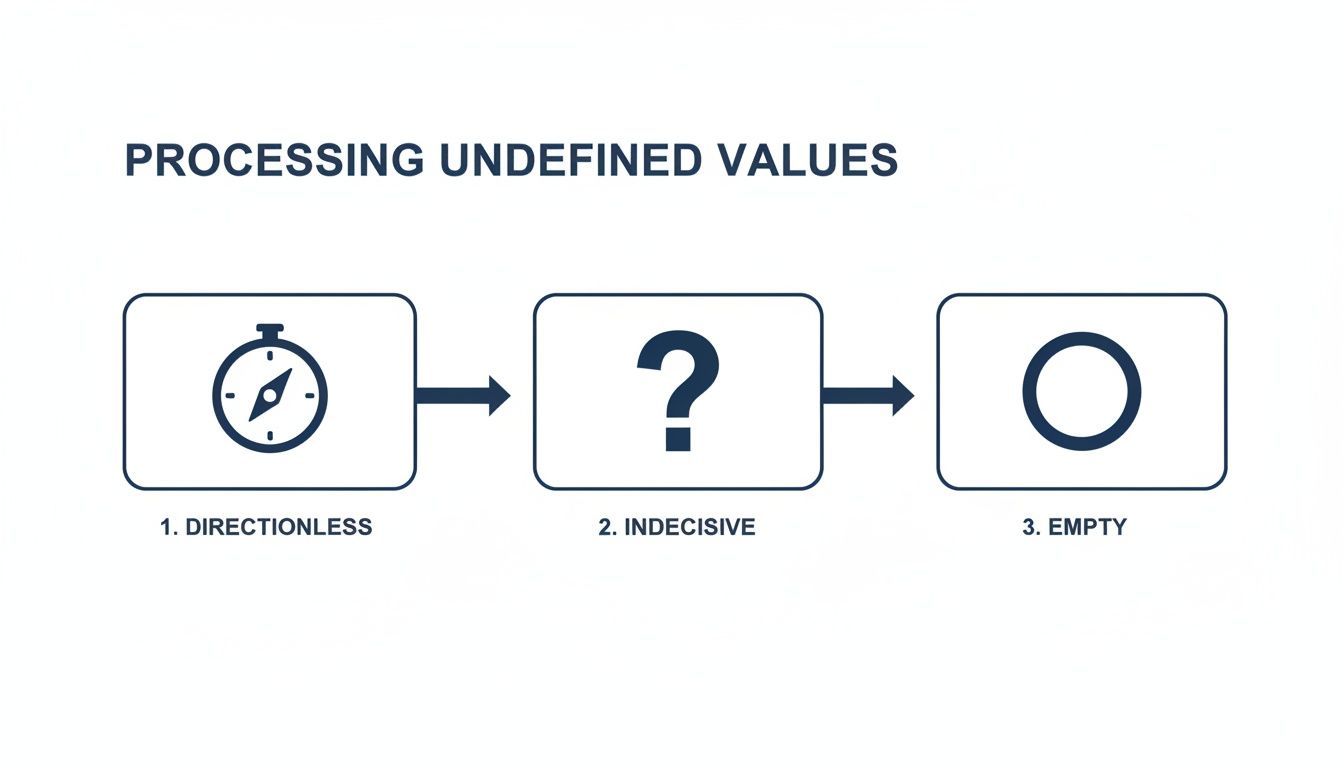
- Lack of Clarity: You can’t start if you don’t know what “starting” looks like. A vague goal like “get fit” or “start a side hustle” is paralysing. Your brain, looking for the path of least resistance, defaults to doing nothing because the first step is a complete mystery.
- Lack of Energy: You can’t run on an empty tank. Constant stress, poor sleep, a bad diet, and decision fatigue drain your physical and mental reserves. When your energy is at rock bottom, even simple tasks can feel monumental. Your brain isn’t being lazy; it’s conserving what little fuel it has left.
- Lack of Structure: An unstructured day is an open invitation for distraction. Without a clear plan or routine, your time gets swallowed up by low-effort, high-dopamine hits like gaming or social media. This isn’t a moral failing; it’s just your brain following the easiest path laid out for it.
This shift in perspective is critical. You move from self-blame (“What’s wrong with me?”) to practical problem-solving (“What part of my system is failing?”). It’s the difference between trying to fix a faulty engine by yelling at it versus opening the bonnet to see what’s wrong.
The Real Problem Is Overload, Not Inaction
The notion that young men are inherently lazy is a myth. More often, you’re dealing with a world that demands constant attention and performance, which leads straight to burnout. Your brain seeks refuge in low-effort activities to cope. It’s an act of self-preservation, not a character defect.
This feeling of being stuck can also point to a deeper disconnect. When your daily actions don’t line up with what you truly value, it’s natural to feel a profound lack of drive. This is where getting a handle on your bigger picture becomes essential. If you want to dig deeper into this, our guide on discovering what is the purpose and meaning of life has some solid insights.
By rejecting the “lazy” label, you can investigate the real cause. Are you unclear on your goals? Are you physically or mentally exhausted? Is your environment a chaotic mess? These are all solvable problems. You don’t need more willpower. You need a better system, a clearer direction, and a practical starting point.
Diagnose the Real Problem: Clarity, Energy, or Structure?
Before you can build a system to move past procrastination, you need to know what you’re actually up against. That feeling of being “lazy” or stuck isn’t a single problem. It’s usually a symptom pointing to one of three root causes.
Pinpointing the real issue is the first practical step toward ditching the lazy label for good.
Is it a lack of clarity, leaving you unsure of what to do next? Maybe it’s a lack of energy, making simple tasks feel like climbing a mountain. Or is it a lack of structure, sending your day into a tailspin of disorganised chaos? Nine times out of ten, what you’re calling “laziness” is just one of these three culprits in disguise.
This isn’t just a personal feeling; it reflects broader trends. Here in Australia, what many young men call “laziness” is often a nervous system screaming for a break. Labour productivity has been flat or falling, yet many are working more. Since 1980, productivity gains should have allowed us to cut our work week by about 15 hours. Instead, we took 77% of that dividend as higher income, forcing us to work longer hours just to keep up.
For a young man in Sydney or Melbourne juggling study, work, a side hustle, and social pressure, it’s a recipe for burnout. When your brain is constantly overloaded, it defaults to energy-saving mode, that’s where the mindless scrolling and gaming comes in. It’s a survival mechanism, not a character flaw. You can dig into the full productivity bulletin to see the economic pressures for yourself.
The Three Core Issues
To solve this, you need to become a detective in your own life. Let’s take a common scenario.
An aspiring freelance web designer knows he should be finding clients. But instead of sending cold emails or updating his portfolio, he spends hours watching YouTube tutorials on new design trends. He even spends an entire evening tweaking his website’s font for the tenth time.
He feels “lazy,” but the real problem could easily be one of the three:
- Clarity: He doesn’t have a specific, actionable plan. “Find clients” is way too vague. What’s the very first, smallest step he can take right now? His brain defaults to research, a classic form of productive procrastination, because it’s easier than facing the uncertainty of client outreach.
- Energy: He’s just finished a full day at his main job, dealt with life admin, and tried to squeeze in a gym session. By the time he sits down to work on his freelance business, his decision-making tank is on empty. His brain craves the easy dopamine hit from YouTube over the high-effort task of crafting a compelling email.
- Structure: He has no dedicated time or space for his freelance work. He just tries to “fit it in” whenever he feels like it, which is a recipe for inaction. Without a non-negotiable block of time in his calendar, distractions will always win.
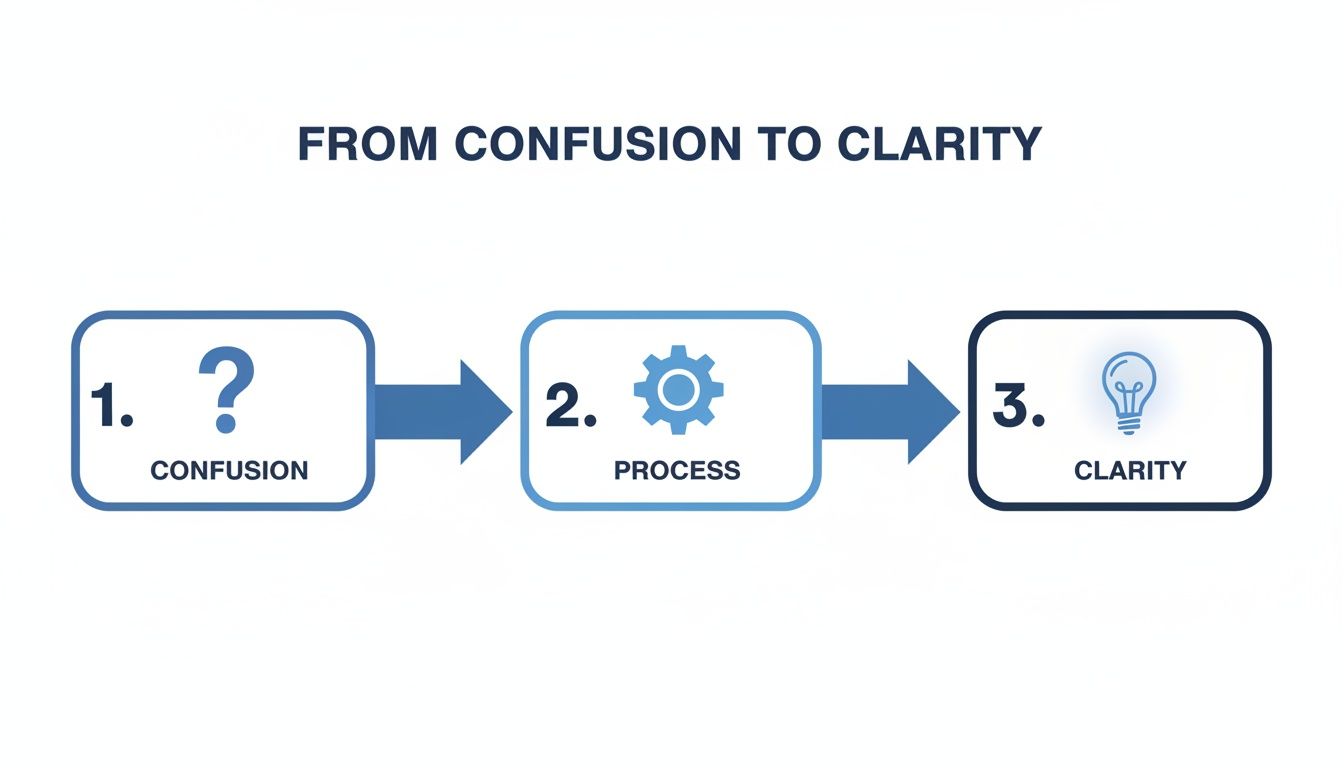
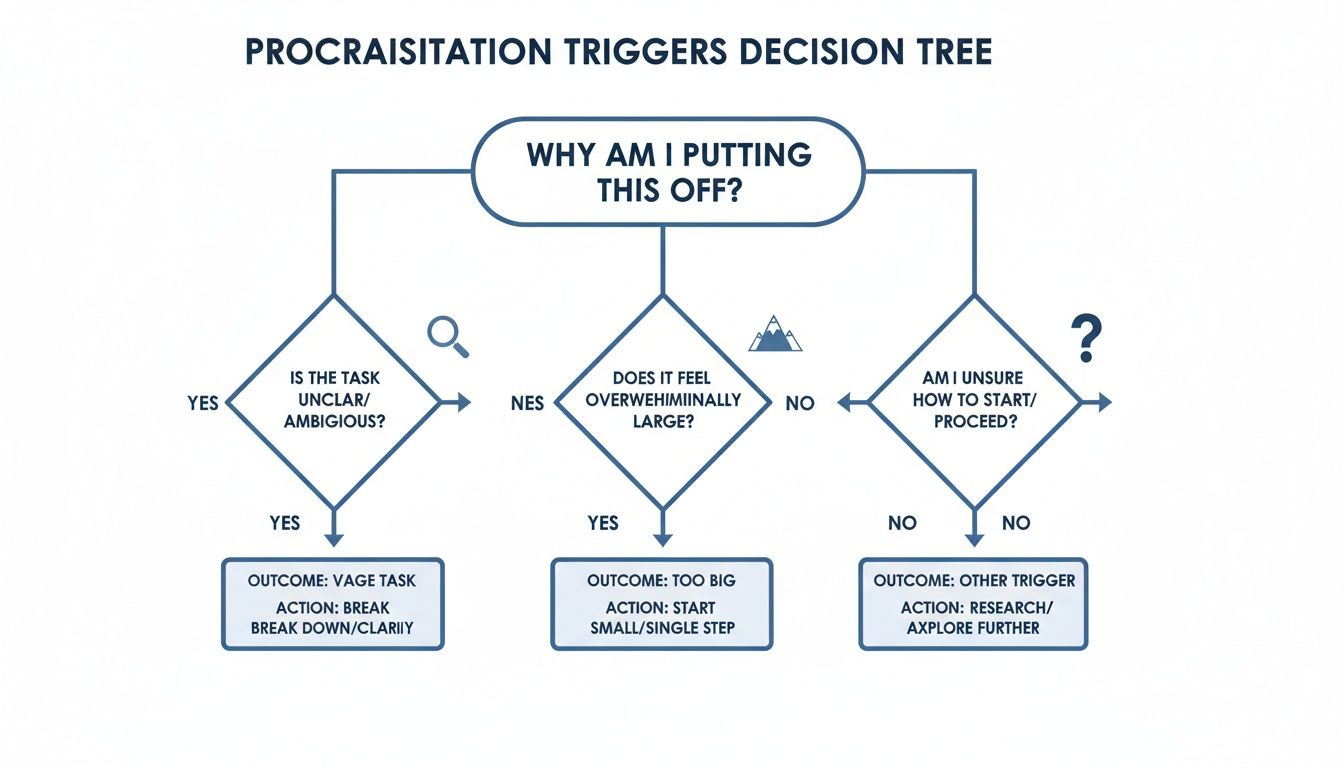
This flowchart gives you a simple way to visualise the decision path and figure out where you’re getting stuck.
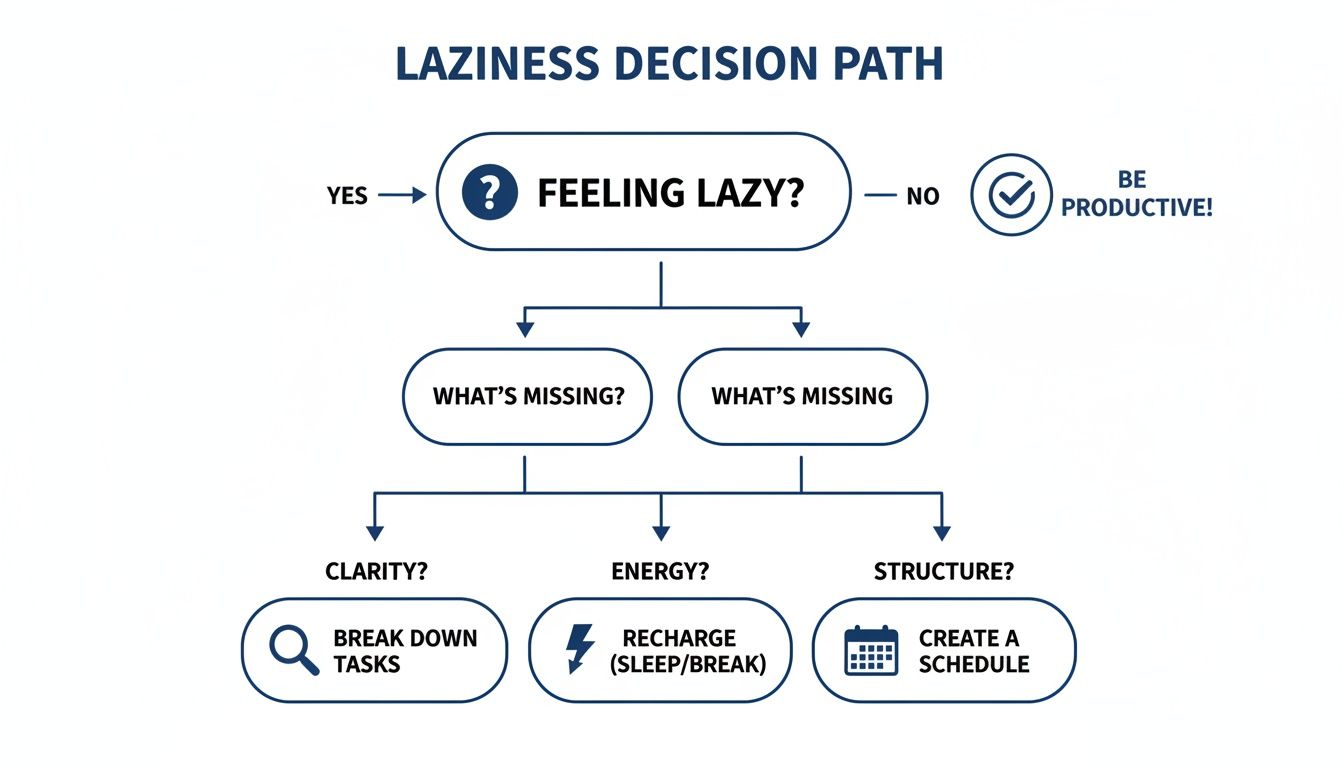
As you can see, the path forward starts by asking the right question about why you feel stuck, which points you directly to the most likely cause.
How to Diagnose Your Specific Issue
You don’t need a therapist to figure this out. The key is to honestly connect how you feel with what you do (or don’t do). Being straight with yourself is the only way to make real progress.
Think about the last time you put off something important. What was the main feeling? What did you do instead?
Use this table to match your experience to the most likely cause. This quick exercise will give you a clear starting point.
Identifying Your Procrastination Trigger
| Symptom You Feel | Potential Cause: Clarity | Potential Cause: Energy | Potential Cause: Structure |
|---|---|---|---|
| Overwhelmed & Lost | “I don’t even know where to begin, so I do nothing.” | “The thought of starting is just too exhausting.” | “I have so much to do, I just bounce between tasks.” |
| “Productive” Procrastination | You spend hours researching or planning instead of doing the actual task. | You choose easy, low-value tasks over the important, difficult ones. | You get distracted by every notification or interruption that comes your way. |
| Physical Sensation | A feeling of mental fog or confusion when you think about the task. | A sense of physical heaviness, fatigue, or wanting to nap. | A feeling of being scattered, restless, or unable to focus. |
| Your Go-To Excuse | “I need to figure out the perfect plan first.” | “I’m just not in the mood right now; I’ll do it later.” | “I just got sidetracked; I’ll get back to it in a minute.” |
Once you’ve identified your primary bottleneck, whether it’s clarity, energy, or structure, you can stop fighting a vague enemy like “laziness”. Now you can start using targeted, practical solutions for the real problem.
The following sections will give you the exact tools for each.
Build Momentum with Micro-Habits

If you’ve figured out that a lack of clarity, energy, or structure is what’s holding you back, your first instinct might be to draft a massive, life-altering plan. Avoid this. That’s a classic recipe for feeling overwhelmed and doing nothing at all.
The practical way to get unstuck is to start so small it feels almost ridiculous.
Big goals are intimidating. They demand a huge amount of activation energy, something you might be running low on right now. The answer isn’t to rely on willpower; it’s to lower the bar for getting started so much that taking action is the easiest choice you can make.
This is where the simple power of micro-habits comes into play. We’re talking about actions so tiny, they’re almost impossible not to do.
The Non-Zero Day Philosophy
The core idea is simple: do one thing, no matter how small, that moves you toward your goal. This is the “non-zero day” principle. Its only purpose is to break the cycle of doing nothing. You end the day having done something, anything, to avoid a zero.
This isn’t about achieving a grand outcome. It’s about shattering the inertia that keeps you stuck. Every day you do nothing, that “zero” mindset digs in a little deeper. A single, tiny action proves to you that you can start.
The goal isn’t to write the book; it’s to write one sentence. The goal isn’t to get a six-pack; it’s to do one push-up. The goal isn’t to clean the whole house; it’s to put one dish in the sink.
This approach shifts your focus from the overwhelming finish line to the single, manageable step right in front of you. It’s a practical mental tool that rebuilds trust in yourself, one tiny win at a time.
Why Starting Small Works
Perfectionism is often just procrastination in disguise. We don’t start because we’re afraid we won’t do it perfectly. A micro-habit completely sidesteps that trap. The goal isn’t perfection; it’s just completion.
When the entire task is “do one push-up,” you can’t really fail. This creates a positive feedback loop. You do the thing, you get a small sense of accomplishment, and your brain starts to link action with a reward instead of stress.
Think of it like getting a heavy train moving. That first nudge requires the most force. A micro-habit is the lever that makes that first push feel almost effortless. Once the wheels are turning, even slowly, it takes far less energy to keep them going.
Putting Micro-Habits Into Practice
So, what does this look like in the real world? Here are some extremely small actions you can take, based on what you might be avoiding. The key is to make it so easy you can’t talk yourself out of it.
- For Fitness:
- Put on your running shoes and stand by the front door. That’s it.
- Do a single bodyweight squat while you wait for the kettle to boil.
- Unroll your yoga mat and leave it on the floor.
- For Work or Study:
- Open the document you need to work on. Just open it.
- Read one paragraph of the textbook chapter.
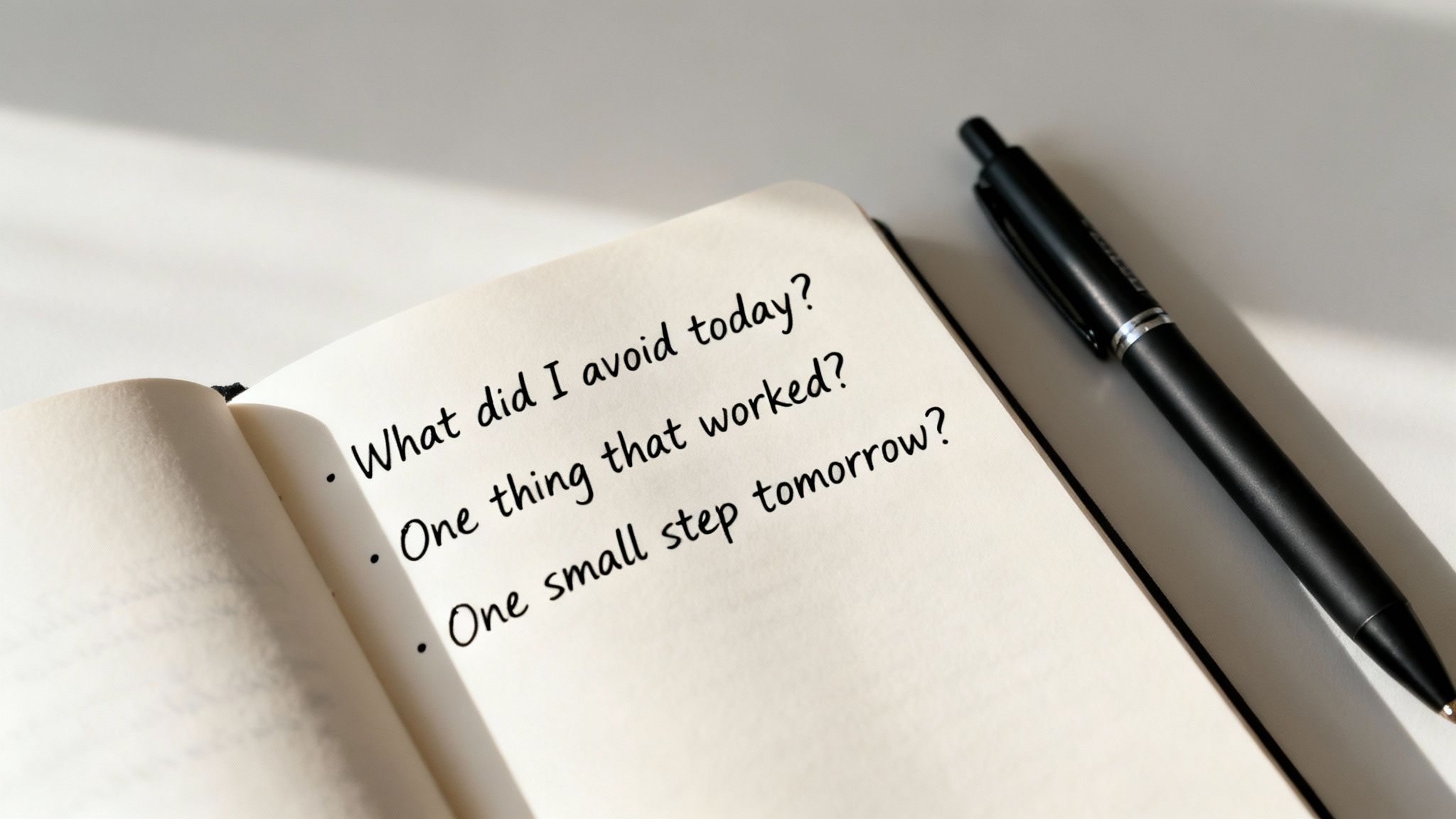
- Write one bullet point on your to-do list for tomorrow.
- For Organisation and Life Admin:
- Pick up one piece of clothing off the floor and put it away.
- Take one dirty dish from your room and put it in the kitchen.
- Open that email you’ve been avoiding. You don’t have to reply, just open it.
The momentum often builds after the micro-habit. Once you’ve done one squat, a few more feel much easier. Once you’ve written one sentence, the next one doesn’t seem so daunting. You’re just tricking your brain into getting over that initial hurdle.
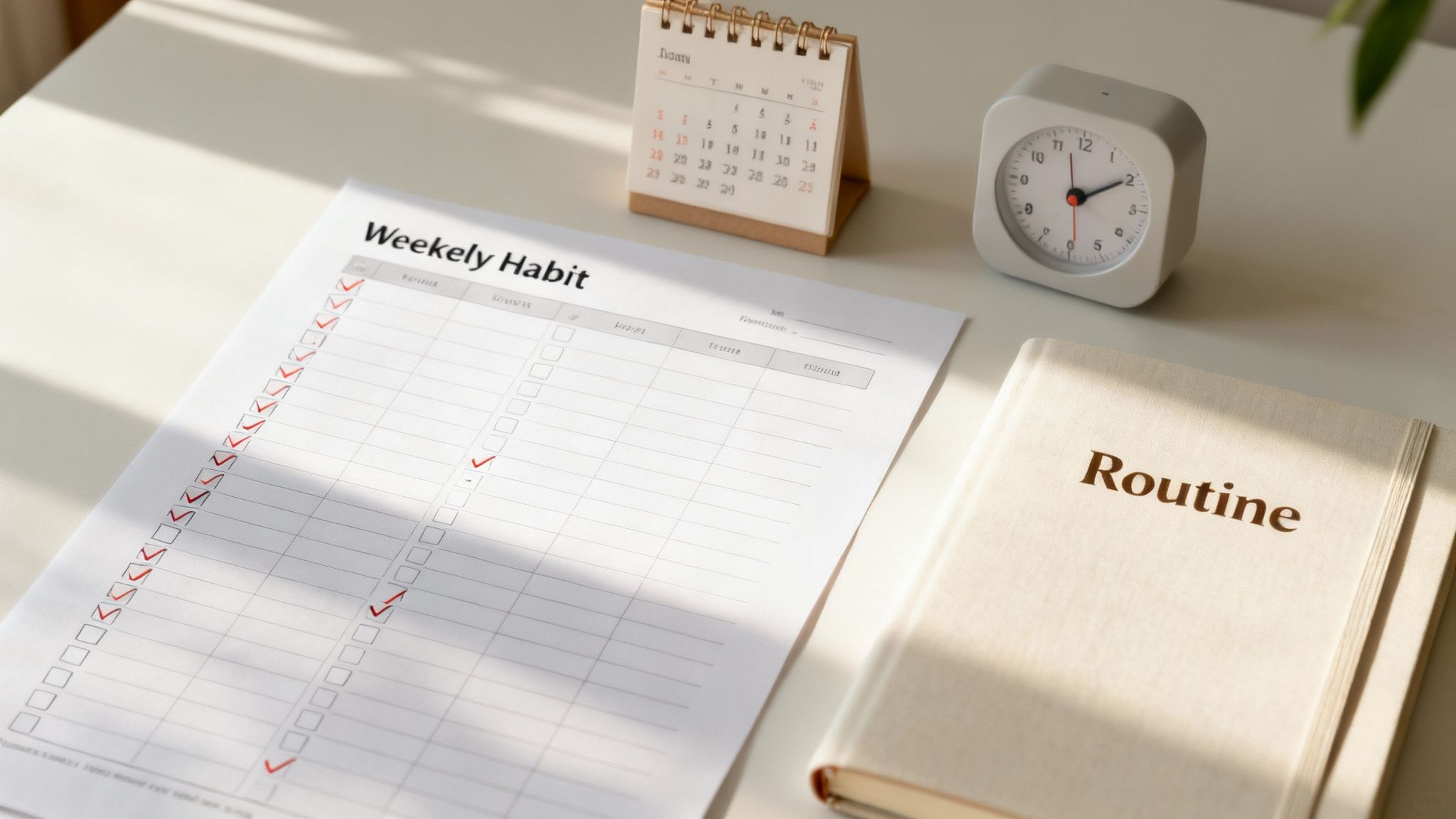
Keeping a visual record of these small wins is a game-changer for building consistency. Seeing your progress, no matter how small, reinforces the habit. You can find a straightforward framework in our free habit tracker template to get you going.
The point is to rebuild the habit of doing. By stringing together these tiny, consistent wins, you slowly build unstoppable momentum. Over time, these almost laughably easy actions naturally grow into the bigger, more significant efforts you were aiming for all along. This isn’t about a sudden transformation; it’s about making progress so accessible that you simply can’t fail to begin.
Engineer Your Environment for Action

Relying on willpower alone to force yourself to do things is a losing battle. Willpower is a finite resource. After a long day of making decisions and dealing with people, it’s depleted. The practical way to change what you do isn’t to fight yourself harder, but to change the space you do it in.
Your environment constantly sends signals that trigger your behaviour. That phone on your desk is begging to be checked. The PlayStation in plain sight is calling out for “just one quick game.” By consciously designing your surroundings, you make the actions you want to take the path of least resistance.
Make Good Habits Easy
The core principle is simple: increase the friction for unhelpful habits and decrease it for helpful ones. It’s about making productive choices almost automatic and destructive ones a genuine inconvenience. You’re not trying to become a better person through sheer force; you’re just making it easier to do the right thing.
Figure out what you want to achieve, then work backwards to set up your environment for that specific outcome.
- Want to go to the gym in the morning? The night before, lay out your gym clothes, shoes, socks, and water bottle. When you wake up, the path is already cleared. All you have to do is get dressed and go.
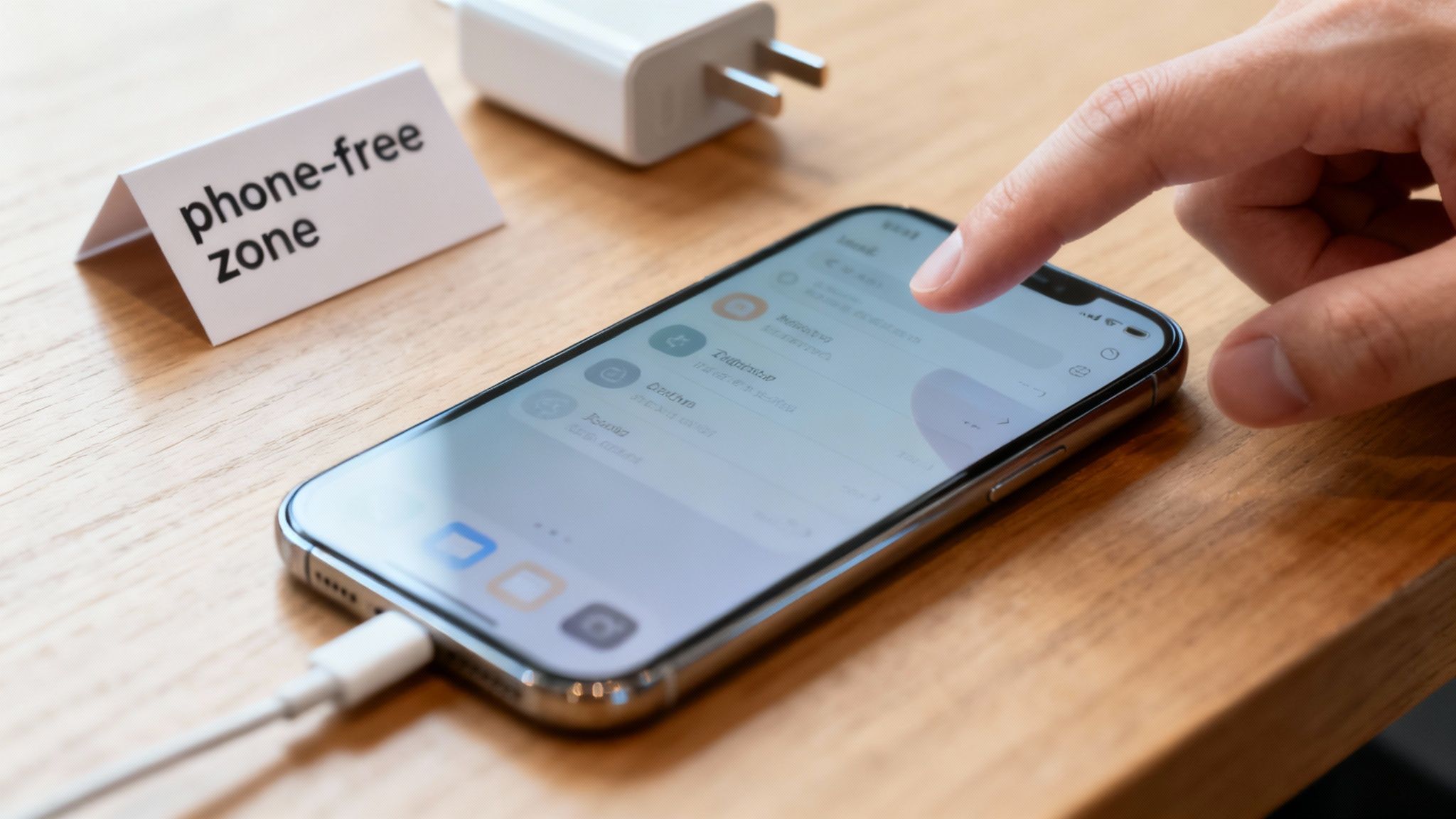
- Need to focus on an assignment? Switch your phone off and put it in another room. Close every browser tab that isn’t essential. The five seconds it takes to walk to the other room is often enough friction to stop you from mindlessly scrolling Instagram.
- Trying to drink more water? Don’t rely on memory. Place a full water bottle on your desk first thing in the morning. Every time you glance at it, you’re prompted to take a sip.
Your environment will win over your willpower almost every time. Stop trying to out-discipline your surroundings and start making your surroundings support your discipline.
Design a Workspace That Invites Focus
Your desk or workspace is ground zero for productivity. If it’s a chaotic mess of old coffee mugs and random papers, your brain will feel just as cluttered. A clean, organised space reduces mental noise and signals to your brain that it’s time to get down to business.
Take 10 minutes at the end of each day to reset your space. Put things away, wipe down the surface, and set out what you need for your first task tomorrow. This small ritual not only tidies your desk but also clears your head, making it far easier to start fresh the next day.
If this feels like a personal failing, it’s not just you. This is a pattern across the country. The Australian Bureau of Statistics found that by mid-2025, our national labour productivity had barely moved since late 2019, that’s five years of running in place. A key reason is that we’re throwing more hours at the same old inefficient habits. For a young man stuck between TikTok and a half-finished project, this is a perfect mirror. When your environment is built for distraction, your personal productivity will also flatline. You can dive deeper into the ABS findings on labour productivity and see the bigger picture.
Tame Your Digital Environment
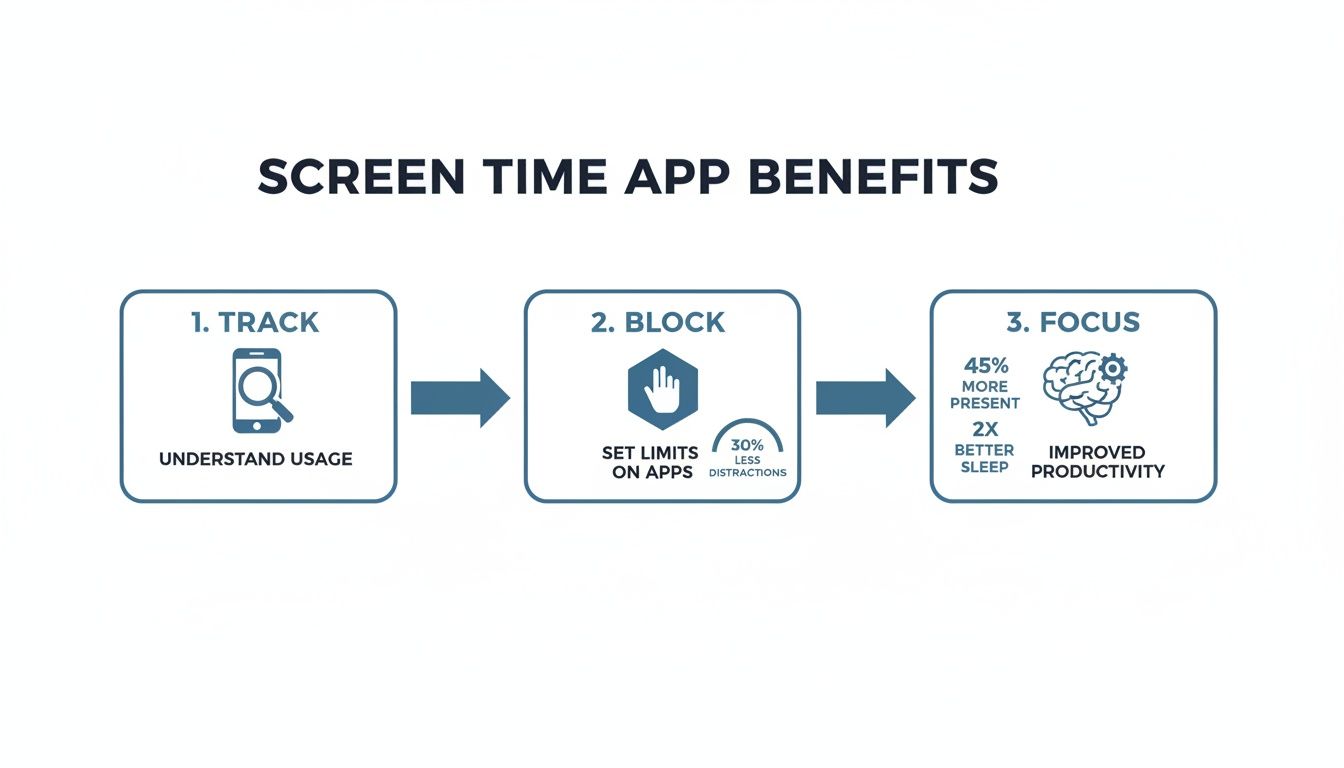
Your physical space is only half the battle. Your digital environment is just as critical, and your phone is engineered to steal your attention. You need to engineer it back.
Here are a few practical tweaks you can make right now to reclaim your focus:
- Curate Your Home Screen: Move all distracting apps (social media, games, news) off your home screen and into a folder on the second or third page. Your home screen should only have utility apps like maps, your calendar, and notes. This adds a crucial layer of friction.
- Turn Off Notifications: Go into your settings and disable notifications for every non-essential app. A notification is an interruption. Take back control.
- Use Grayscale Mode: It may sound extreme, but switching your phone to grayscale makes it instantly less appealing. Those bright, flashy colours are designed to trigger dopamine hits. Without them, your phone becomes a boring tool rather than an exciting toy.
By deliberately engineering your physical and digital spaces, you remove the constant need for decision-making. You make your desired actions the default, which is how you stop being lazy without ever having to rely on motivation.
Implement a Simple Weekly Framework
Forget complicated productivity systems with endless rules. They often create more work than they solve. When you’re already feeling stuck, the last thing you need is another complex project to manage.
The solution isn’t a fancy new app; it’s a simple, sustainable structure for your week.
This is about shifting from being reactive to being intentional. Instead of waking up each day wondering what you should do, you’ll have a basic roadmap ready to go. This stops the constant mental drain of making decisions on the fly, freeing up your energy to actually get things done.
The Sunday Sit-Down
The cornerstone of this approach is a short, non-negotiable planning session. Let’s call it the ‘Sunday Sit-down’. It’s a 20-minute ritual that sets the entire tone for your week ahead. No spreadsheets or complex software, just you, a pen, and a piece of paper.
The goal is to answer one simple question: “What are the 1–3 most important things I need to accomplish this week to feel like I’ve made progress?”
You’re not trying to plan every minute of every day. You’re just identifying your main priorities.
Here’s how it works:
- Brain Dump: Spend 5 minutes writing down everything you think you need to do this week. Don’t filter or organise; just get it all out of your head and onto the page.
- Identify the Critical Few: Now, look at your list and circle the 1 to 3 items that will have the biggest positive impact. These are your weekly priorities. Everything else is secondary.
- Block the Time: Open your calendar and schedule specific, realistic blocks of time to work on these priorities. Be honest with yourself about your energy levels. If you’re exhausted after work, don’t schedule your hardest task for 7 PM.
This simple habit directly solves the ‘lack of structure’ problem. It gives your week a skeleton, so you’re not just floating from one distraction to the next.
A week without a plan is just seven days of reacting. A week with even a basic plan is seven days of intentional action. You decide where your energy goes, not your impulses.
From Vague Goals to Concrete Actions
This weekly framework forces you to get specific. A goal like “work on my side hustle” is useless because it’s not actionable. During your Sunday Sit-down, you’d translate that into a concrete task like, “Draft three cold emails to potential clients” or “Spend two hours coding the landing page.” See the difference?
Breaking down your big goals into these weekly chunks is a massive step forward. If you’re looking for a more structured way to build this out over the long term, our personal development plan template can help you connect these weekly actions to your bigger vision.
This structured approach might feel boring, but it’s effective. You can see this play out on a national scale. The Australian Treasury had to lower its long-run labour productivity growth forecast because “winging it” has proven so ineffective.
The 2023 Intergenerational Report showed that even a small drop in productivity growth could cost the average person over $10,000 in real income in 40 years. It’s a perfect analogy for your own life: small, consistent investments in structure compound into huge differences in outcome. You can read more about how these small gains add up in the Treasury’s productivity overview.
Be Flexible and Forgive Yourself
This isn’t about creating a rigid, military-style schedule. Life happens.
You’ll get sick, unexpected tasks will pop up, and some days you just won’t have it in you. That’s fine.
The framework is a guide, not a cage. If you miss a scheduled block, don’t write off the whole day or week. Just look at your calendar, find the next available slot, and reschedule it. The goal is progress, not perfection.
By investing just 20 minutes each week, you create a simple system that tells you exactly where to focus. This small dose of structure is often all you need to stop feeling stuck and start building real, sustainable momentum.
Frequently Asked Questions
Even with a good plan, you’re going to hit a wall. It’s normal. The trick is to see these moments not as failures, but as chances to tweak your approach. Let’s cover some of the most common hurdles you’ll likely face.
What If I Try These Steps and Still Feel Lazy?
First, let’s ditch the “lazy” label for good. That feeling isn’t a verdict on your character; it’s a signal flare telling you something in your system needs adjusting. If you’ve put these steps into action and you’re still stuck, it’s time to put your mechanic’s hat back on.
Flick back to the diagnosis section. Did you misidentify the root cause? It’s an easy mistake to make. Maybe you focused on building a better schedule (structure) when the real issue was that you’re just constantly knackered (energy). Or perhaps you have plenty of energy but feel aimless because your goals are too vague (clarity).
Treat it like a puzzle, not a personal failing. If one adjustment doesn’t work, you don’t blame the engine. You just calmly look for the next thing to tweak. The problem is always in the system you’ve built, not in who you are.
How Long Does It Take for These Habits to Stick?
Forget the old “21 days to form a habit” myth; the real answer is, it’s different for everyone and for every single habit. Instead of staring at an imaginary finish line, shift your focus to consistency over speed. The goal isn’t to magically wake up one day as a different person. It’s to build a reliable system that supports you every day, good or bad.
Acknowledge the small wins. Did you stick to your micro-habit for seven days straight? That’s a significant victory. Some new routines will feel natural in a month, while others might take longer. The most important change here is your perspective: this is about building a new, more effective way of operating for the long haul. Focus on the process, and the results will take care of themselves.
I Have Zero Motivation. What Is the Absolute First Step?
This is the most critical question. Do not wait for motivation to show up. It’s an unreliable feeling that rarely arrives when you need it. The good news is, you don’t need it.
Action creates momentum, which can then lead to motivation, not the other way around.
Your absolute first step is the smallest, most laughably easy physical action you can take right now. Use the ‘2-minute rule’: find one task related to your goal that you can complete in less than 120 seconds.
- Want to start writing? Open a blank document and just write a single title.
- Need to clean your room? Pick up one dirty shirt and chuck it in the laundry basket.
- Thinking about a run? Just find your running shoes and put them by the door.
Make the barrier to entry so ridiculously low that it feels harder not to do it. That tiny action is a spark. Your only job today is to create that one spark. The next tiny step will feel easier from there.
If you’re tired of piecing this all together on your own and want a practical, no-BS guide to build a life with clear direction, Your Bro is here to help. I offer one-on-one coaching to give you the personalised structure and accountability you need to finally move forward. Book a free discovery call today and let’s build a plan that actually works for you. Find out more at https://yourbro.com.au/coaching.