Welcome to Life Skills No One Teaches You, a series where we tackle the real-world stuff that somehow gets missed in the curriculum. Today, we are diving deep into one of the biggest hurdles you will face in any writing task: mastering how to write essay introduction paragraphs that actually get the job done.
Your Guide to Nailing the Essay Introduction
That blinking cursor on a blank page can feel like a personal challenge. Let's be real, the pressure to write the perfect opening is a classic procrastination trigger for students everywhere, from high school and TAFE to uni campuses across Australia. You get stuck, thinking you need to produce something brilliant before you can even get to your main points.
But what if you changed how you look at the introduction? It’s not some impossible puzzle. Think of it as a simple roadmap for your reader, a quick preview of the journey you are about to take them on. Its job is to set the stage, not be the entire show.
The goal of an introduction is simple: grab the reader's attention, give them a little context, and tell them exactly what you are going to argue. That’s it. No magic required.
This shift in mindset is everything. Once you stop aiming for perfection and focus on function, the whole task becomes way less daunting. The introduction is a tool to serve your essay, not a creative masterpiece designed to stress you out.
A Simple Framework for Every Essay
To make this even more practical, let’s break it down into a simple, repeatable framework: Hook, Context, and Thesis.
-
The Hook: This is your opening. Just a line or two designed to pull your reader in and make them want to know more.
-
The Context: Here, you give just enough background information so your topic makes sense. Keep it brief.
-
The Thesis: This is the most critical piece. It’s a sharp, direct statement that lays out your main argument and often flags the key points you'll cover.
Nailing this three part structure gives you a reliable system you can lean on for pretty much any essay you have to write. This approach is all about building a solid study structure to cut down on the overwhelm, which is a core principle we focus on at Your Bro coaching.
This systematic method takes the mystery out of learning how to write essay introduction paragraphs, turning a source of anxiety into a predictable first step. For an even deeper dive, you can find more guidance on how to write a good essay introduction.
Getting this first step right creates momentum. If you are really wrestling with that "where do I even start?" paralysis, check out our guide on how to overcome procrastination for more strategies. Building these foundational skills is the key to making your study life less stressful and more effective. If this kind of structured, no nonsense approach sounds like it could help you across the board, book a free discovery call with me to see how coaching can build your focus and consistency.
Right, let's get down to business. A killer introduction isn't some magic trick reserved for writing geniuses. It's a formula. A simple, three part structure that, once you get it, makes writing intros a repeatable skill instead of a stressful guessing game.
Think of it like building with LEGOs. You’ve got three essential bricks: the Hook, the Context, and the Thesis Statement. Snap them together in the right order, and you build a solid foundation for your essay, every single time.
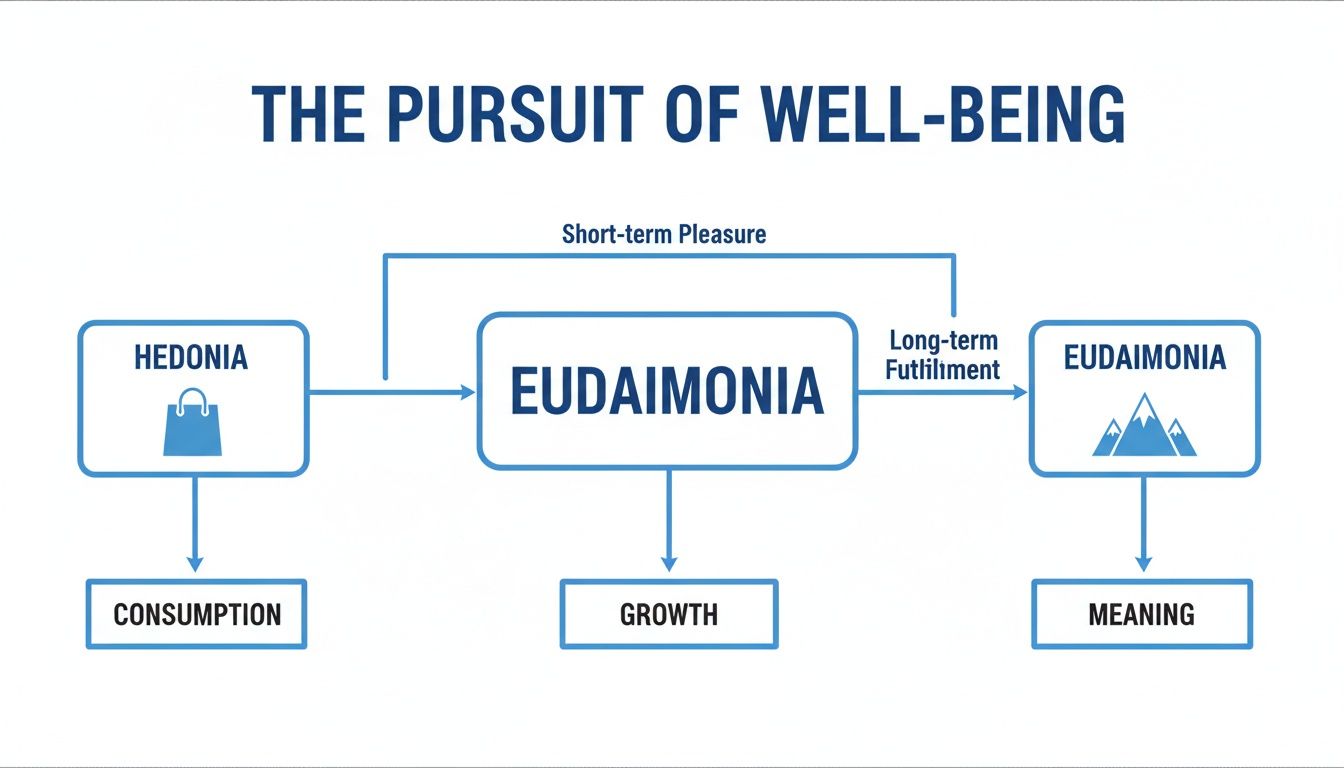
This little map shows you how the pieces fit together, guiding your reader from that first sentence right to your main argument.
See how each part flows into the next? It’s a clean, logical path that takes all the guesswork out of the process.
First, You Need a Hook
The hook does exactly what it says on the tin: it grabs your reader and does not let go. You've got maybe one or two sentences to catch their attention and prove your essay is worth their time. A weak, boring hook is like a limp handshake. It does not exactly fill your marker with confidence.
Your goal here is to make them sit up and think, "Alright, you have my attention."
Hook Techniques for Different Essay Types
Not every hook works for every type of essay. You would not open a serious argumentative piece with a funny personal story (well, usually not). Here’s a quick breakdown of which hook types tend to work best for argumentative, expository, and narrative essays.
| Hook Type | Description | Example for an Argumentative Essay | Example for an Expository Essay |
|---|---|---|---|
| Surprising Statistic | A shocking or unexpected number that highlights the topic’s importance. | “Over 80% of single use plastics are never recycled, contributing to a global waste crisis that demands immediate government intervention.” | “The global e-learning market is projected to reach $325 billion by 2025, fundamentally changing how educational content is delivered.” |
| Provocative Question | Asks a question that forces the reader to think and take a position. | “Should a society prioritise economic growth at the expense of its most vulnerable citizens?” | “What are the psychological mechanisms that make certain advertising campaigns so memorable?” |
| Relevant Quote | Uses a powerful quote from a key figure to add authority. | “As Nelson Mandela said, ‘Education is the most powerful weapon which you can use to change the world,’ yet access remains unequal.” | “Famed psychologist Carl Jung once noted, ‘The meeting of two personalities is like the contact of two chemical substances…’ “ |
| Short Anecdote | A brief, punchy story that makes an abstract topic personal. | “For a single mother working two jobs, the debate over raising the minimum wage is not theoretical. It is the difference between dinner and debt.” | “Imagine trying to assemble a piece of IKEA furniture without the instructions; this is precisely what navigating a new software without a user manual feels like.” |
Choosing the right tool for the job makes all the difference. The key is relevance. Your hook must connect directly to the rest of your essay. A wild statistic about sharks isn’t going to work for an essay on Shakespeare unless you can draw a seriously clever line between them.
Next, Set the Context
Once you’ve snagged your reader’s attention, you need to give them some background. This is the context. It’s the crucial bridge connecting your attention grabbing opening to your main argument.
The biggest mistake I see students make is dumping way too much information here. Your intro is not the place for a full blown history lesson or a summary of every single point you are about to make. Just give the essential details your reader needs to understand where you are coming from.
Think of it like this: you are giving your reader just enough information to understand the map you are about to show them. No more, no less.
For a history essay, this might be a couple of sentences on the time period. For a literature essay, a brief mention of the author and the novel’s main ideas will do. Keep it lean and focused.
Finally, the Most Important Bit: The Thesis Statement
This is the absolute heart of your introduction. If your intro is a car, the thesis is the engine. It’s the one sentence that clearly states your main argument, your position, your big idea. Everything in your essay must point back to this single statement.
A strong thesis has two key features:
-
It’s arguable. It’s not a statement of fact; it’s a claim someone could reasonably challenge. “The Australian government is based in Canberra” is a fact. “The centralisation of Australian politics in Canberra has disconnected politicians from regional communities” is an arguable thesis.
-
It’s a roadmap. It gives the reader a preview of the main points your body paragraphs will cover, and in what order.
This sentence is non negotiable. If you want to really nail this critical component, there are some great guides on how to write a thesis statement that can help you sharpen your skills.
Getting this one sentence right feels like a lot of pressure, because it is. It’s also where most students fall down. They are not taught these specific, practical techniques for building an argument from the ground up. This is the kind of foundational skill we focus on building at Your Bro Coaching. We create simple, repeatable systems to cut through the overwhelm.
If you feel like your study methods are all over the place, a free discovery call can show you how a bit of structure makes all the difference. Learning how to write essay introduction paragraphs is just the start.
Right, so theory is one thing, but seeing how this all works in the real world is where it really clicks. Let’s ditch the abstract stuff and look at how the Hook, Context, and Thesis structure actually plays out in essays you’d write at uni or TAFE here in Australia.
I am going to break down two complete introductions for you, sentence by sentence. This is not about having some secret writing gift; it’s about learning a simple, repeatable pattern that just works. Once you see the logic behind each sentence, you can start building your own strong intros without the guesswork. This is the exact approach we take in Your Bro coaching: building simple, effective systems to make study less of a headache.

University Humanities Essay Example
Let’s say you are studying at a uni like the University of Melbourne or ANU and you have been handed a history essay.
Essay Question: Analyse the impact of the 1967 Referendum on the political landscape for Indigenous Australians.
Here’s what a solid intro looks like, followed by a full breakdown of why it works.
(1) For decades, the Australian Constitution explicitly excluded Aboriginal and Torres Strait Islander people from being counted as citizens in their own land. (2) The 1967 Referendum, which saw over 90% of Australians vote ‘Yes’ to amend this, is often celebrated as a landmark moment of national unity and progress. (3) However, while the referendum was a significant symbolic victory, its immediate practical impact on the political landscape was far more limited and complex than is commonly acknowledged. (4) This essay will argue that despite its symbolic importance, the 1967 Referendum’s tangible political outcomes were constrained by pre existing systemic barriers, the slow pace of legislative follow through, and a failure to address the core issue of land rights, thereby paving the way for future activism rather than delivering immediate political empowerment.
Annotated Breakdown
Let’s pull that apart to see what each sentence is actually doing.
-
Sentence 1 (The Hook): Kicks off with a provocative historical fact. It immediately grabs the reader by highlighting a massive injustice, setting a serious, academic tone from the get go. No fluff here.
-
Sentence 2 (The Context): This lays the groundwork. It names the key event, the 1967 Referendum, and mentions the common view of it as a moment of “national unity.” This is crucial because it sets up the argument that’s about to challenge that simple narrative.
-
Sentence 3 (The Thesis – Part 1): Here’s the start of the actual argument. That little word “However” is a powerful signal that we are about to pivot from the common view to the essay’s core point. It makes the debatable claim that the impact was “limited and complex.”
-
Sentence 4 (The Thesis – Part 2 / The Roadmap): This is the engine room of the whole essay. It spells out the main argument and gives the reader a clear map of what’s coming in the body paragraphs: 1) systemic barriers, 2) slow legislation, and 3) the failure to address land rights. Your marker now knows exactly what to expect.
If you want to dive deeper into structuring academic arguments, the University of Sydney’s Learning Centre has some excellent guides that are well worth a look.
TAFE Report Example
Now, let’s switch gears to something more practical, like a business report for a course at TAFE NSW. The tone here is much more direct and focused on solving a problem.
Report Task: Write an introductory section for a report analysing the challenges of staff retention in the Australian hospitality industry and proposing potential solutions.
An effective intro for this would be something like this:
(1) The Australian hospitality industry is currently facing a staff turnover rate exceeding 30%, a figure significantly higher than the national average across all sectors. (2) This chronic issue of poor staff retention creates substantial costs for businesses through constant recruitment, training, and lost productivity. (3) To address this challenge, this report analyses the primary drivers of high turnover, focusing on inadequate pay, poor work life balance, and a lack of professional development opportunities. (4) Based on this analysis, it will propose a three pronged strategy centred on implementing transparent pay structures, offering flexible rostering, and creating clear pathways for career progression.
Annotated Breakdown
See how this one gets straight to the point? It’s all business.
-
Sentence 1 (The Hook): It opens with a hard hitting statistic. A turnover rate of over 30% is a clear, measurable problem. It immediately tells the reader why this report even exists and why they should care.
-
Sentence 2 (The Context): This sentence spells out the consequences of that statistic. It frames the problem in business terms, “substantial costs” and “lost productivity”, which is exactly the right language for a TAFE report.
-
Sentence 3 (The Roadmap – Part 1): This clearly outlines the analysis part of the report. It lists the three problem areas that will be investigated: pay, work life balance, and development opportunities. Nice and organised.
-
Sentence 4 (The Roadmap – Part 2): This part outlines the solutions. It directly maps its proposed fixes to the problems identified in the sentence before it. The reader knows instantly that this report will be structured, practical, and give them actionable advice.
Learning to write intros by following a clear model like this takes all the guesswork out of it. It’s a skill you can build and rely on every single time, which is a massive confidence booster when you’ve got an assignment deadline looming. This practical skill of how to write essay introduction paragraphs will serve you well beyond your current course.
Common Introduction Mistakes and How to Fix Them
Alright, let’s get into the common traps. Even when you know the Hook, Context, and Thesis formula, it’s ridiculously easy to fall into a few bad habits that markers see time and time again.
Knowing what these are is like having the answers to the test beforehand. Spotting and fixing them is often what separates a good essay from a great one. These are not massive, complex errors, either. They are just small missteps that weaken your argument before it even gets going. The good news? They’re dead simple to fix once you know what you’re looking for.

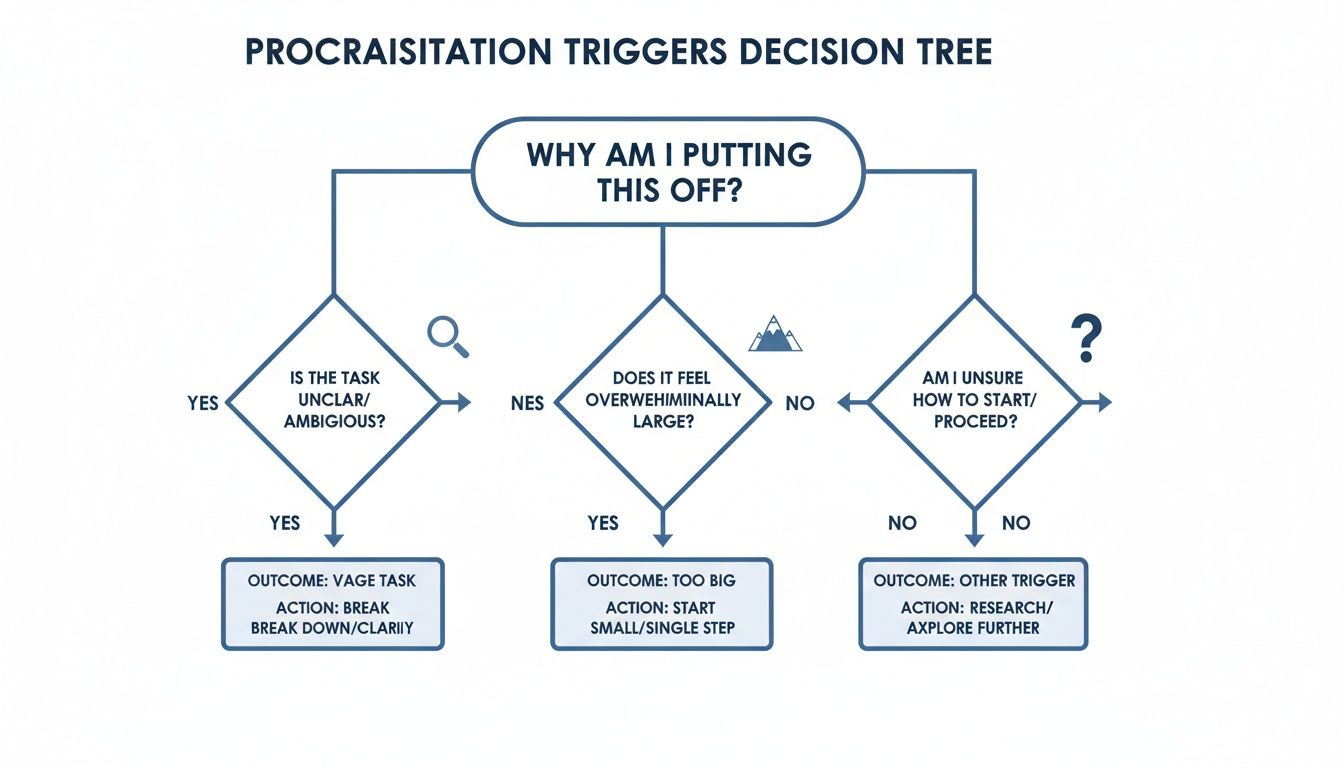
This image nails it. The goal is to turn a messy, unclear idea into something sharp and effective. Let’s break down exactly how to do that.
Mistake 1: The Vague Thesis Statement
This is the number one offender, hands down. It’s when your thesis makes a general observation but does not actually take a clear, arguable stance. It’s wishy washy, leaving your reader guessing what you are actually trying to prove.
-
Before: “Social media has had a big impact on the mental health of Australian teenagers.”
-
After: “While often seen as a tool for connection, the curated realities and algorithmic pressures of platforms like Instagram and TikTok have significantly contributed to rising rates of anxiety and poor self esteem among Australian teenagers by fostering a culture of constant social comparison.”
See the difference? The “after” version is specific, debatable, and gives the reader a clear map of the points to come. It’s a confident claim, not just a lazy observation. This is a critical lesson in how to write essay introduction success.
Mistake 2: Too Much Background
This one happens when you get nervous and just dump a whole lot of historical info into your intro. Remember, the introduction is the trailer, not the whole movie. Your marker already has a baseline knowledge of the topic; you just need to give them enough context to understand your specific argument.
-
Before: “For centuries, humanity has looked to the stars. The ancient Egyptians used them for navigation, and the Greeks named the constellations. In the 20th century, the space race between the USA and the USSR led to major technological advancements. This eventually led to the creation of the International Space Station, which is a collaborative project.”
-
After: “The privatisation of space exploration, once the exclusive domain of national governments, has accelerated innovation but also raises critical questions about regulation. The recent rise of commercial entities like SpaceX and Blue Origin fundamentally challenges existing international space treaties and creates a pressing need for updated legal frameworks.”
The first example is a history lesson. The second one gives just enough context to set up a specific, modern problem.
Mistake 3: Using Clichéd Hooks
You know the ones. “Since the dawn of time…” or “Webster’s Dictionary defines ‘courage’ as…” These openings are tired, unoriginal, and signal to your marker that you have not put much real thought into grabbing their attention.
A strong hook needs to be fresh and directly relevant to your topic.
-
Before: “In today’s fast paced world, technology is more important than ever.”
-
After: “More than 95% of Australian households are now connected to the internet, yet a significant digital divide persists between urban and remote communities.”
The second option uses a specific, surprising statistic to create immediate interest. It’s concrete and speaks to a real world issue in Australia.
Struggling to find your focus can sometimes feel like you are being lazy, but often it’s just a lack of structure. We’ve got some thoughts on how to stop being lazy that might help reframe the problem for you.
Getting these fundamentals right is crucial. By 2018, only 9% of Australian Year 9 students were hitting a high standard in sentence structure. It’s a shocking statistic that highlights a massive need for clear, practical writing instruction. A key element of this instruction should focus on how to write essay introduction paragraphs effectively.
Developing focus and consistency in your writing is a skill that pays off everywhere. It’s a core principle we build on at Your Bro coaching. If you feel like your study habits are holding you back, book a free discovery call to see how a structured approach can make a world of difference.
Your Quick-Reference Introduction Checklist
Okay, we’ve covered a lot of ground. It’s time to boil all that theory down into a simple, practical tool you can use every single time you sit down to write.
Think of this as your pre flight check before you even think about building the rest of your essay.
This is not about giving you more work. It’s about creating a quick, reliable system to make sure you’ve nailed the essentials. Seriously, running through these points will take you less than two minutes, but it’s the best way to catch any major issues before you’ve ploughed 500 words in the wrong direction.
This checklist based approach is exactly how we do things in Your Bro coaching. We build simple systems that take the stress out of studying and get you better results. The goal is always to make school feel manageable, not like a mountain you have to climb every day.
Your Go-To Checklist for Every Introduction
Bookmark this page, screenshot this list, whatever you need to do. Before you move on to your body paragraphs, ask yourself these questions:
-
Does it have a strong hook? Does my first sentence actually grab attention with a surprising fact, a challenging question, or a relevant quote? Is it more interesting than “Since the dawn of time…”? Be honest.
-
Is the context brief and relevant? Have I given the reader just enough background to understand what I am talking about? Or have I gone off on a long, unnecessary history lesson?
-
Is the thesis statement clear and arguable? Is my main argument summed up in a single, confident sentence? Crucially, could someone reasonably disagree with my position?
-
Does it provide a roadmap? Does the intro give a sneak peek of the main points I am about to cover? Does the reader know what to expect and in what order?
A great introduction lets you answer all these questions with a confident ‘yes’. It’s your promise to the reader that you know where you’re going and their time will not be wasted.
Going through this process builds confidence and consistency, two of the most important things for any student. When you know you’ve got a solid foundation, writing the rest of the essay just gets so much easier. You can track your progress and build this habit using our free habit tracker template.
It’s also good to remember that these fundamental writing skills are well within reach. For example, back in 2019, 82.4% of Aussie Year 9 students met the national minimum standard in writing. This just goes to show that with the right guidance, mastering the basics is totally achievable. You can read the full report to explore more education insights.
Nailing how to write essay introduction paragraphs is a huge step. If you want to apply this kind of structured, no BS thinking to all your studies, book a free discovery call with me to chat about building your own system.
Frequently Asked Questions
Alright, we’ve walked through the methods and the classic mistakes, but there are always a few specific questions that pop up. Let’s tackle them head on so you can walk away feeling 100% ready to nail your next intro.
How Long Should an Essay Introduction Be?
A solid rule of thumb for most TAFE and uni essays is to keep your introduction to about 10% of the total word count.
So, for a 2,000 word essay, you are aiming for something in the ballpark of 200 words. Do not get too hung up on hitting the number exactly, though. The real goal is to make sure you’ve covered the essentials: the hook, the context, and a crystal clear thesis.
Can I Write My Introduction After the Body Paragraphs?
Absolutely. In fact, many experienced writers swear by this method. It’s often much easier to draw an accurate map of your essay once you know exactly where the journey has taken you.
A great strategy is to sketch out a rough, placeholder intro just to get the ball rolling. Then, once the body of your essay is done and dusted, circle back to perfect it. This guarantees your thesis and roadmap perfectly match the arguments you’ve actually made.
What’s the Difference Between a Thesis Statement and a Topic Sentence?
This is a brilliant question because it gets to the heart of essay structure. Your thesis statement is the big one. It is the core argument for your entire essay and lives in your introduction. Think of it as the central idea you are setting out to prove from start to finish.
A topic sentence, on the other hand, is the boss of a single body paragraph. It states the main point of that specific paragraph and must always link back to support the overarching thesis. For some really reliable, in depth resources on this stuff, check out the guides from UNSW Academic Skills.
Do I Have to List All My Arguments in the Introduction?
You definitely need to outline the main points or themes you will be covering, but there is no need to list every single piece of evidence you are going to use. This outline, which usually follows your thesis, acts as a roadmap for your reader.
It’s all about managing expectations and showing them the structure of your argument. For instance, you might say your essay will analyse the economic, social, and political factors behind a certain event, without getting into the nitty gritty of each factor just yet. A key part of mastering how to write essay introduction paragraphs is learning to give a clear preview, not the whole show.
Feeling like your study habits could use a similar structured, no nonsense approach? At Your Bro, we build systems that cut through the overwhelm so you can focus on what matters. Book your free discovery call today at Your Bro