Welcome to ‘Life Skills No One Teaches You’, the series where we break down the practical stuff that actually moves the needle in your career and life. Today, we’re tackling a seriously powerful tool: the Expression of Interest, or EOI. Think of it as your secret weapon for getting a foot in the door for an unadvertised job, securing a government grant, or kicking off a business partnership that could change everything. The goal here is to give you a clear method so you can learn how to write expression of interest today and feel confident doing it.
The Underrated Skill of Writing an Expression of Interest

Let’s get one thing straight: an EOI is not just a shorter resume or a desperate plea for a job. A great EOI is a strategic move. It’s a proactive document that shows you’ve spotted a need or an opportunity within an organisation and that you’re the person who can help address it. It’s your chance to start a conversation on your terms.
Forget the corporate jargon and confusion that usually surrounds this topic. This guide breaks down exactly how to write expression of interest with a simple, straightforward framework that works in any Australian context, from a small business in Perth to a government department in Canberra.
Think of me as an older brother who’s been through it. My goal is to give you a practical plan to help you make intentional moves instead of just winging it and hoping for the best. This skill is about more than just writing. It’s about clarifying what you want, communicating it professionally, and following through without spiralling into self-doubt. Knowing how to write expression of interest is a life skill that pays dividends.
Why This Skill Matters More Than You Think
Mastering how to write expression of interest is a game-changer because it puts you in control. Instead of passively waiting for opportunities to pop up on job boards, you create them. This is especially crucial in Australia, where so many roles and contracts are filled through networks and proactive outreach long before they’re ever advertised.
A well-crafted EOI can help you:
-
Access the “hidden job market” by approaching companies you admire directly.
-
Show initiative and confidence, two qualities every employer or partner values.
-
Position yourself as a problem-solver, not just another applicant with a list of qualifications.
-
Start a meaningful conversation that can lead to interviews, partnerships, or project collaborations.
An Expression of Interest is your opening move in a professional chess game. It’s not about shouting for attention. It’s about showing you understand the board and have a strategy to help the other player win.
This guide will walk you through the entire process, from understanding the purpose to structuring your document for maximum impact. If you feel lost trying to figure out your next step, remember that getting this clarity is exactly what we work on at Your Bro. A free discovery call can be the first step to building a solid plan for your career.
Setting the Foundation for a Powerful EOI

Before you even think about typing a single word, let’s get your head in the right space. Writing a good EOI is one of those crucial life skills nobody really teaches you, but it can make all the difference. This is a core part of the “Life Skills No One Teaches You” philosophy: building practical abilities that get you real-world results.
A huge mistake I see people make is treating an EOI like a shorter version of their resume or just another cover letter. It’s not. Think of it as a strategic pitch. Its entire purpose is to spark enough curiosity to start a conversation.
You’re making the first move, showing them you’ve actually thought about their world before asking for their time. That shift in perspective is the whole game. Getting this right is fundamental to knowing how to write expression of interest.
The Three Foundational Questions
To make sure your EOI actually lands, you have to get clear on three things before you start writing. Nail these, and you’re 90% of the way there.
-
Who are you writing to? I mean, really who? A hiring manager, a grant committee, a potential business partner? Figuring out their role tells you what they care about most.
-
What specific problem do they have? No one puts out a job ad or offers a grant for fun. They’ve got a need, a gap to fill. Your job is to figure out that specific pain point.
-
How do you solve it? This is your core message. You need to draw a straight line from your skills and experience directly to their problem. Show them you’re not just looking for an opportunity. You’re bringing the solution.
This is where knowing your own purpose really pays off. When you’re solid on what you bring to the table, it’s so much easier to explain how you can help someone else. It’s a challenge I see all the time, and it’s a core part of the coaching we do here at Your Bro. We help young men define and articulate their own value without the guesswork. The skill of how to write expression of interest starts with self-awareness.
Conducting Quick and Effective Research
The answers to those questions won’t just magically appear. You’ve got to do a little digging. Don’t stress, this is not about spending days buried in research. A focused 30 minutes is often more than enough.
Start with their company website, especially the ‘About Us’ and ‘News’ sections. Then, jump on LinkedIn and look up the key people in the department or organisation. What kind of language do they use? What projects are they getting excited about? This stuff is absolute gold. For government EOIs, review the tender documents on platforms like AusTender. A great resource from the Australian Government Business portal explains how to find opportunities.
Your research goal is simple: find the gap between where the organisation is and where they want to go. Your EOI positions you as the bridge to close that gap.
Getting this foundation right is critical if you want to know how to write expression of interest that actually gets a response. Just look at the competitive Australian job market. With over 1.2 million young professionals recently navigating career changes, the ones who stand out are the ones who do this work. In fact, tailored EOIs with a clear purpose statement received 35% more interview callbacks than generic applications.
To see how others structure their initial pitch, it can be useful to look at examples like these Sample Letters of Inquiry for Grants. Learning how to write expression of interest built on solid research and a genuine understanding of what the other person needs will put you miles ahead of the competition.
The Anatomy of a Winning EOI Blueprint

Right, let’s pull this thing apart and see how it works. The good news is that nearly every successful EOI follows the same basic structure. Once you get your head around this blueprint, you can tweak it for any scenario. Whether you’re chasing a new role, a project grant, or a business partnership, the principles are the same.
We’re going to break down each component, giving you a simple, repeatable framework. This is where we move from theory to action and get practical about how to write expression of interest that actually gets read.
The Opening Hook: Your Subject Line and Intro
First impressions count, and for an EOI, that starts with your email subject line. It needs to be professional, clear, and just interesting enough to earn that click. Whatever you do, avoid dead-on-arrival titles like “Job Application”.
You need to be specific and show your value from the get-go.
-
For an unsolicited job EOI: “Expression of Interest: Experienced Digital Marketer with a Focus on E-commerce Growth”
-
For a government tender: “Expression of Interest: [Your Company Name] for [Project Name/Number]”
-
For a partnership proposal: “Partnership Inquiry: Exploring a Collaboration Between [Your Company] and [Their Company]”
Your opening paragraph then needs to immediately connect the dots for the reader. State who you are, why you’re writing to them specifically, and what you’re bringing to the table. Think of it as your thirty-second elevator pitch, but on paper.
The Core of Your Message: Connecting Your Value to Their Need
This is the guts of your EOI. It’s where you build your case. Forget listing every single job you’ve ever had. Instead, zero in on two or three key achievements or skills that directly solve a problem you’ve identified through your research. This is the heart of learning how to write expression of interest well.
Try structuring this section to tell a story of value.
-
Start with their potential need: “I understand many growing tech firms in Sydney are facing challenges with scaling their customer support operations efficiently.”
-
Offer your specific solution: “In my previous role at Company X, I led a project that implemented a new ticketing system, reducing response times by 40% and increasing customer satisfaction scores by 15%.”
-
Bring it back to them: “I am confident a similar approach could deliver significant results for your team.”
To give you a simple blueprint, here’s how the essential components of any effective EOI fit together.
Core EOI Structure Breakdown
| Section | Purpose | Example Snippet (Job Application) |
|---|---|---|
| Introduction | State your purpose and who you are, making an immediate connection. | “I’m writing to express my strong interest in a potential Senior Project Manager role at Your Company.” |
| Body Paragraph 1 | Align your top skill/achievement with their biggest need or goal. | “I noticed your recent expansion into the APAC region, and my experience launching three similar projects in this market could be valuable.” |
| Body Paragraph 2 | Provide a second concrete example with a measurable result. | “I increased project efficiency by 25% by introducing an Agile framework, a skill set I believe would benefit your team.” |
| Closing/CTA | Propose a clear, easy next step and reiterate your enthusiasm. | “I have attached my CV and would welcome a brief 15-minute chat next week to discuss this further.” |
This table shows how each piece builds on the last, guiding the reader from initial interest to a clear action.
The golden rule is to use the ‘You’ lens, not the ‘I’ lens. Frame every point around their needs, their goals, and their problems. This simple shift is a massive part of understanding how to write expression of interest that gets results.
This approach forces you to be crystal clear on what you offer and how it helps them. If you’re struggling to connect those dots for yourself, that’s a classic sign you might need an outside perspective. It’s something we tackle head-on in our coaching sessions at Your Bro, helping guys articulate their worth without feeling like they’re bragging.
The Powerful Closing: Your Call to Action
The final part of your EOI is arguably the most important. You’ve made your case, and now you need to make it incredibly easy for them to take the next step. A weak closing like “I look forward to hearing from you” just leaves all the work in their court.
Be polite but direct with a clear call to action.
-
Suggest a specific next step: Propose a “brief 15-minute call next week to discuss this further.”
-
Offer more value: Mention a portfolio, case study, or a more detailed proposal you can share.
-
Reiterate your enthusiasm: End on a positive, confident note that reinforces your genuine interest.
By providing a clear path forward, you remove friction and seriously increase your chances of getting a response. To really see how these concepts come together, it helps to look at a real-world Australian example. This guide offers a great breakdown of a winning express of interest sample that can help it all click. Remember, you’re not just asking for a favour. You’re proposing a valuable conversation.
Getting Your EOI Right for Different Aussie Contexts
A generic, copy-paste EOI is the quickest way to land in the ‘delete’ folder. It’s a simple fact. An application for a hip creative agency in Melbourne needs a totally different vibe than one for a government tender in Canberra. Nailing this tailoring process is what separates the serious contenders from the time-wasters. It’s a key part of how to write expression of interest effectively.
Honestly, this is just a core life skill. It’s about reading the room. You have to show you’ve done your homework and that you respect the reader’s time by speaking their language. It proves you get their world, which is a massive first step toward convincing them you belong in it.
This is not about just tweaking a few words here and there. It’s about fundamentally shifting your perspective to line up with the exact audience you’re trying to reach. That level of thoughtfulness immediately puts you ahead of the pack.
Cracking the Corporate Code
When you’re targeting a private company, your first port of call is their website. Specifically, the “About Us” or “Our Values” page. This is not just corporate fluff. It’s the exact language they use to describe themselves, and your job is to mirror it right back at them.
-
If they’re all about “innovation and disruption”, frame your achievements around projects where you challenged the status quo or brought new ideas to life.
-
If their whole deal is “customer-centric solutions”, then you need to highlight your experience in roles that directly boosted customer satisfaction or improved the user experience.
By using their language, you show you’re a cultural fit before they even reply. It signals that you actually understand what makes them tick. If you’re struggling to figure out what your own core drivers are, our guide on how to identify your personal values can be a really helpful starting point.
Navigating Government and Tenders
Government applications are a completely different beast. They are usually formal, highly structured, and obsessed with mitigating risk and following process. Forget the creative flair. Your EOI needs to scream competence and reliability.
Even if selection criteria are not explicitly requested in the initial EOI, it’s a smart move to subtly address them anyway. Frame your skills using public sector language. Think accountability, process improvement, and delivering value for the taxpayer. You’re showing them you’re a safe pair of hands, a dependable choice. For more specific advice, resources like the Victorian Government’s guide to writing a strong application are invaluable.
Pitching Partnerships and Collaborations
When your EOI is for a business partnership or collaboration, the game changes again. It’s not just about what you can do anymore. It’s about what you can build together. The central theme has to be mutual benefit.
Your EOI needs to lay out a crystal-clear value proposition. How will this partnership help them hit their goals? What unique skills, market access, or resources are you bringing to the table? Keep it clear, concise, and compelling. This context really tests your ability to answer the question of how to write expression of interest.
A tailored EOI is a sign of respect. It tells the reader, “I’ve invested my time to understand you before asking for yours.” This simple act builds immediate rapport and trust.
Ultimately, getting results comes down to this customisation. If you’re finding it tough to clarify your message or adapt it for different audiences, this is exactly the kind of hurdle we can clear together. Let’s jump on a free discovery call and get you the clarity you need to communicate your value effectively. This is what Your Bro coaching is all about: helping you get unstuck.
Common EOI Mistakes That Lead to Silence

Let’s talk about the traps. So many smart, capable people fire off their EOI into the world only to be met with deafening silence. It’s frustrating as hell, and it nearly always comes down to a few simple, avoidable mistakes. Knowing how to write expression of interest is just as much about knowing what not to do.
Think of me as the older brother who’ll give you the straight-up feedback others won’t. I’ve seen these same mistakes trip people up time and time again. The good news? Once you spot them, you can easily sidestep them.
The Number One Mistake: It’s All About You
This is the big one. Most people write an EOI that screams, “I need something from you.” It ends up being a laundry list of their skills, their goals, and what they want. While that’s all-important to you, the person reading it is thinking one thing: “What’s in it for me?”.
An EOI that’s just a monologue about your own needs will almost always get deleted. You have to flip the script. Your EOI should be a mirror, reflecting their problems back at them with you standing there as the solution.
Shift your mindset from “Here’s what I want” to “Here’s how I can solve a problem you have”. That single change will dramatically lift your response rate.
Vague Language and Generic Buzzwords
Another classic pitfall is leaning on fuzzy, non-committal language. Phrases like “team player,” “results-oriented,” or “dynamic professional” are completely meaningless. They’re just background noise that every other applicant is using, and they make the reader’s eyes glaze over.
Instead of being vague, be brutally specific.
-
Don’t say: “I have strong communication skills.”
-
Do say: “I led weekly project meetings for a team of ten, which resulted in a 15% improvement in our project delivery times.”
Hard numbers and quantifiable achievements cut straight through the fluff. This is especially true in growing fields. Take Australia’s digital coaching market, for example. Expressions of interest with data-backed results outperformed generic ones by a massive 45% when it came to landing gigs.
Sending an Unreadable Wall of Text
Let’s be real: no one has time to wade through a dense, multi-page document from a stranger. Your EOI has to be scannable and easy to digest. If a hiring manager opens your email and sees an intimidating block of text, they’re likely to just close it without reading a single word.
Keep your paragraphs short. Use bullet points for your key achievements. Leave plenty of white space. The goal is to make your value jump right off the page.
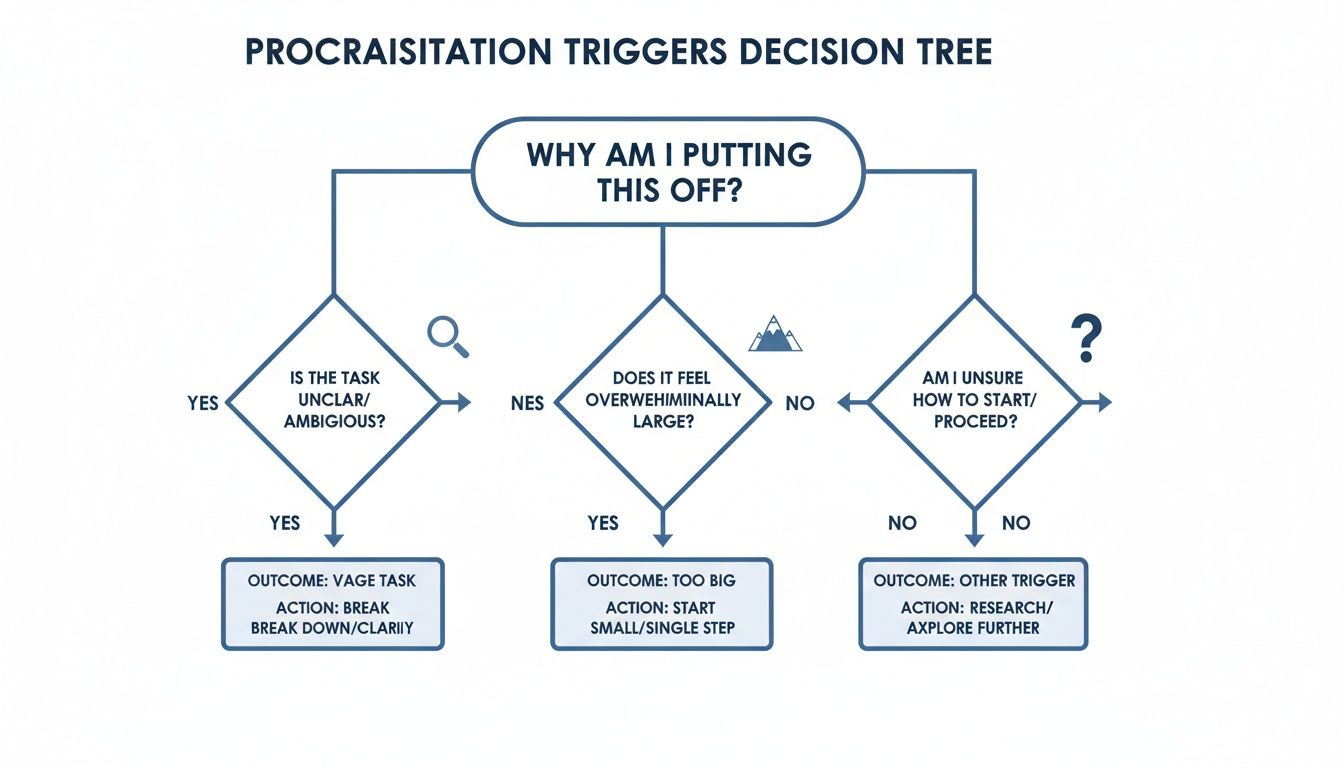
This is a common hurdle, and it’s often tied to a deeper issue like procrastination or just not being sure what to say. If you find yourself stuck staring at a blank page, it’s a sign that you might need a hand getting clear on your message. The whole point of Your Bro coaching is to help young men clarify what they want, communicate it professionally, and follow through without spiralling.
From Reading to Doing: Your Action Plan
Alright, you now have the complete blueprint for how to write an expression of interest. You get the mindset behind it, you know how to structure it, and you’re wise to the common stuff-ups that trip most people up.
But here’s the thing: all that knowledge is completely useless without action.
Your mission, should you choose to accept it, is to pick just one opportunity. A job, a project, maybe even a partnership. Get a first draft of your EOI done. Today. Don’t get lost in your head, and definitely don’t aim for perfection. Just get something down on the page.
Remember what this is all about: communicating your value clearly and professionally. This is a practical skill, and like any other, the only way you get better is by actually doing it. The first one is always the hardest, so let’s get it out of the way.
Your Simple Next Steps
Here’s a small, totally manageable checklist to get the ball rolling:
-
Identify One Target: Pick one organisation or role you’re genuinely interested in. Just one.
-
Do 20 Minutes of Research: Spend a bit of time figuring out their key problem or what they’re trying to achieve. What’s their main goal right now?
-
Draft Your EOI: Use the blueprint we’ve covered. Don’t edit while you write. Just let the ideas flow and get them out.
-
Review and Refine: Sleep on it. Come back to it the next day with fresh eyes and then start polishing.
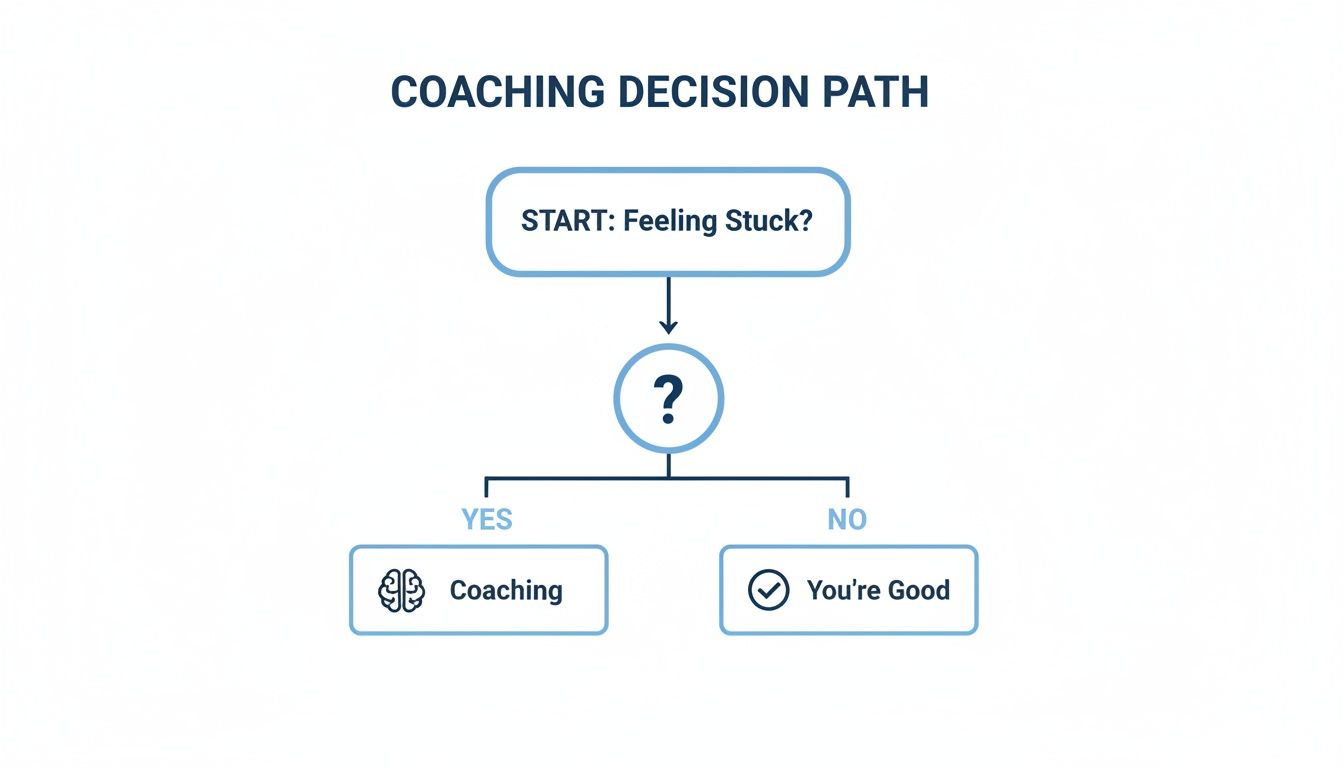
If you find yourself stuck, second-guessing everything, or just are not sure if your draft actually hits the mark… well, that’s exactly what I’m here for.
This is the point where theory smacks into reality, and it’s where most people give up. Don’t let that be you. Taking this one small action is the only thing standing between you and the result you want.
At Your Bro, we help young men get clear on their goals and learn to communicate with real confidence. If you need someone in your corner to give your draft a once-over or just help you get started, book a free discovery call. Let’s turn that idea into a genuine opportunity.
And if you want to get more organised with your broader goals, have a look at our guide on creating a personal development plan template.
Got Questions About EOIs?
Right, let’s tackle a few of the common questions that always seem to pop up when you’re figuring out how to write expression of interest. Getting these small details sorted can make a massive difference in how you come across.
Think of this as the final polish before you hit send. The stuff that helps you look sharp and professional right from that first hello.
How Long Should an Expression of Interest Be?
The golden rule here is to keep it tight. You’re aiming for roughly one A4 page, which usually lands somewhere between 300 and 500 words.
The whole point is to make an impact and get them curious, not to bury them in paperwork. An EOI is your highlight reel, a sharp introduction to who you are and the value you can bring. It’s not your life story. Save the deep dive for your resume or, better yet, the chat you’re trying to land.
EOI vs Cover Letter: What’s the Difference?
This is a classic point of confusion, but the distinction is actually pretty simple once you get it.
-
A cover letter is your direct response to a specific job ad. You’ve seen a role, and you’re making your case for why you’re the best person for that job.
-
An Expression of Interest is more proactive. You’re often sending it “cold” to an organisation you admire, asking about opportunities that might not even be advertised. It can also be a formal first step for things like government grants or business tenders.
Put it this way: a cover letter says, “I’m perfect for the job you advertised.” An EOI says, “I think I can bring real value to your organisation, and I’d love to talk about how.”
Should I Follow Up After Sending an EOI?
One hundred percent, yes. A polite, professional follow-up is a game-changer. It shows you’re genuinely keen and on the ball, and it bumps your name back to the top of their inbox without being annoying.
If you have not heard back within a week or two, it’s completely fine to send a brief follow-up email.
A simple follow-up can honestly double your chances of getting a response. It shows initiative and persistence. These are two things every single organisation is looking for.
Just restate how interested you are in the company and politely ask if they’ve had a chance to look over what you sent. This small step is a crucial part of knowing how to write expression of interest that actually gets results. It proves you’re serious, not just firing off applications into the void.
Feeling a bit stuck or overwhelmed by all this? Good. It means you’re pushing yourself, and that’s exactly where growth happens. At Your Bro, we specialise in helping young men get the clarity and confidence to take these kinds of professional steps. If you want a guide to help you nail your message and follow through, book a free discovery call.