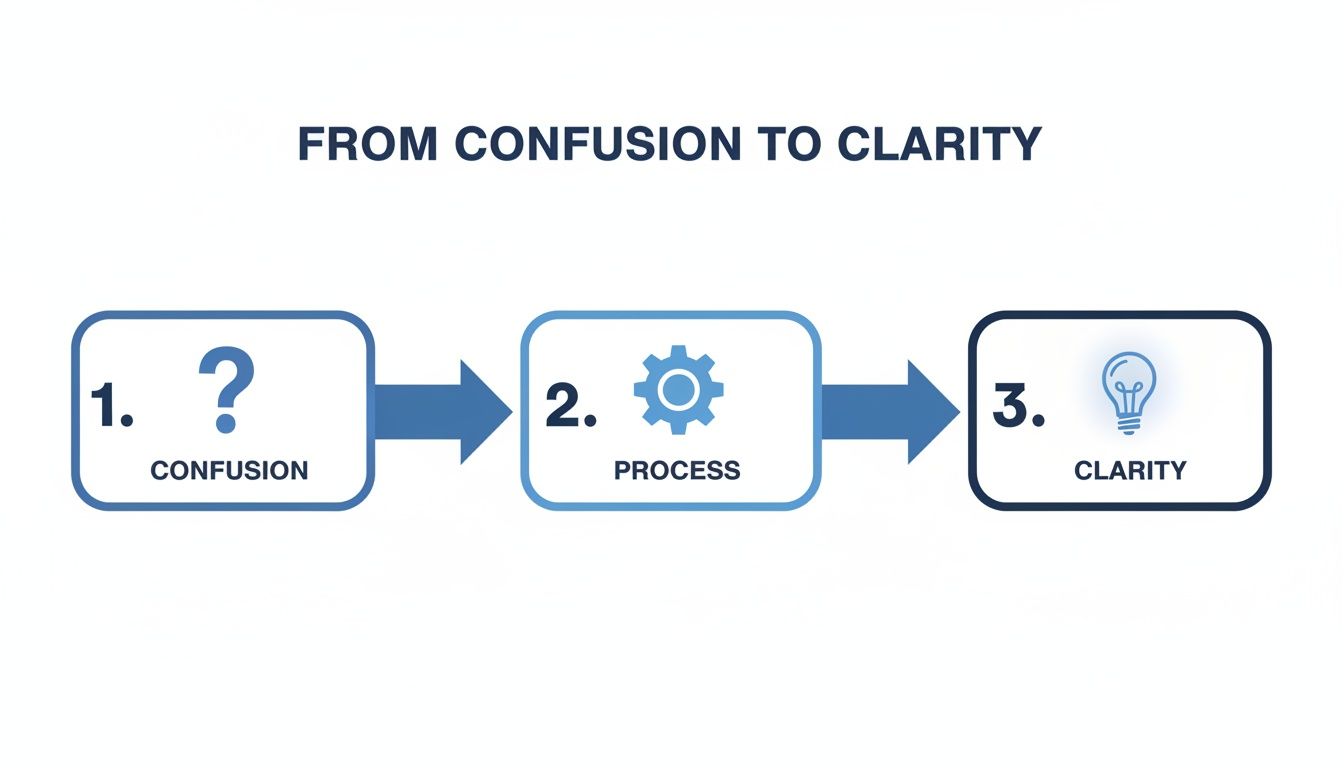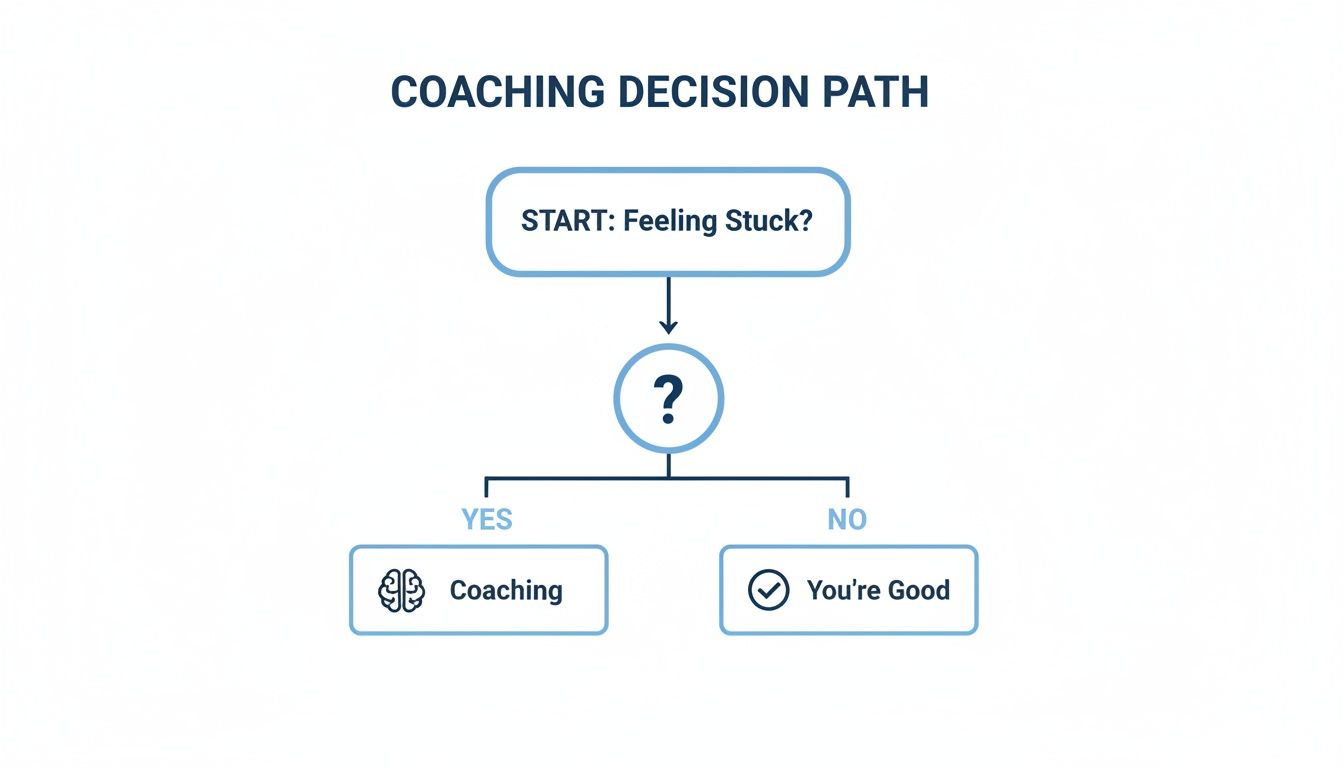
Your sense of self meaning isn’t just a clinical term, it’s your internal compass. It’s that core understanding of who you are, what you value, and what truly drives you, completely separate from the noise of the outside world. It’s the bedrock you need to build a confident and intentional life you’re genuinely proud of.
What Does Sense Of Self Actually Mean For You

Let’s cut through the jargon. Understanding your sense of self is really about recognising the anchor within you. It’s the stable part of you that doesn’t change with your job title, your relationship status, or the number of likes on your latest post.
Think of it like the foundation of a house. When yours is solid, everything else you build on top like your career, relationships, and personal goals can actually withstand life’s inevitable storms.
Without that internal anchor, you end up feeling like you’re just drifting. You’re constantly reacting to what everyone else expects instead of acting from a place of personal conviction. You might find yourself chasing goals that society tells you are important, only to feel hollow and unfulfilled when you get there.
If you feel like a passenger in your own life, it’s a classic sign that your connection to your true self has grown weak. Reconnecting is the first step to taking back the wheel.
Your Internal Operating System
A strong sense of self is like a well-coded operating system for your life. It runs quietly in the background, guiding your decisions and reactions based on a consistent set of personal values and beliefs.
When you’re faced with a tough choice, this internal system helps you filter the options through the lens of what truly matters to you, not what others think you should do.
This inner framework is made up of a few key things you can develop:
- Self-Awareness: The ability to honestly look at your own thoughts, feelings, and behaviours without judging them.
- Core Values: The non-negotiable principles that define what’s most important to you, like integrity, freedom, or connection.
- Personal Beliefs: Your unique take on the world, yourself, and your place in it, shaped by your experiences and reflections.
- Identity Integration: The process of accepting all parts of yourself, the good and the not-so-good, as essential to who you are.
Moving Beyond External Validation
So many of us mistakenly build our sense of self on things that are completely outside of our control. We tie our worth to our professional success, the approval of our peers, or our role as a partner or parent. While these things are important parts of life, they aren’t the core of who you are.
A healthy sense of self provides the stability to navigate your life’s ups and downs without losing your footing. It’s the difference between knowing your worth and needing others to prove it to you.
When your job changes, a relationship ends, or you face criticism, a fragile sense of self crumbles because its foundation was built on shaky ground. In contrast, a robust sense of self allows you to weather these changes because your worth is internal and unshakable.
Developing this internal anchor is the first, most crucial step toward living a life that feels genuinely your own.
Why A Strong Sense Of Self Matters More Than Ever For You
In a world buzzing with digital noise and the endless scroll of social comparison, a solid sense of self isn’t just a nice-to-have, it’s your greatest advantage. This internal anchor dictates how you show up in every single area of your life, from your career path to your closest relationships.
Without a clear picture of your own values and purpose, you’re basically trying to get somewhere without a map. You become easily swayed by every distraction, every external expectation, and every passing trend that pops up on your feed.
This is exactly why building a strong sense of self is so crucial right now. It’s the one skill that lets you cut through all that noise and start building a life you actually want to live, on your own terms.
The Real-World Impact Of A Shaky Identity
When your internal framework is a bit wobbly, the consequences tend to show up in real, often frustrating, ways. You might even recognise some of these patterns in your own life.
- Career Paralysis: You struggle to make any meaningful moves in your career because you honestly don’t know what you really want. Instead of chasing a path that aligns with your values, you end up chasing job titles or salaries that society tells you are impressive, which almost always leads to burnout and a deep sense of dissatisfaction.
- Relationship Instability: You might find yourself becoming a chameleon, mirroring the personalities of your partners or mates and losing your own identity in the process. This reliance on others for validation makes it impossible to build healthy, solid relationships based on mutual respect.
- Digital Distraction: A fragile sense of self makes you a prime target for the comparison trap on social media. You end up scrolling for hours, chasing validation through likes and comments because your self-worth is tied to what other people think, not what you know to be true about yourself.
These struggles are incredibly common, especially for young professionals and new dads navigating massive new responsibilities. It’s easy to feel lost when the pressure from the outside world is high and your internal anchor is weak. For many of us, the path back to ourselves starts by admitting these patterns exist; a journey I’ve shared in my own story.
Your ‘Why’ Is Your Ultimate Advantage
Knowing your personal “why” is what flips the switch from living a reactive life to a proactive one. When you finally get what truly drives you, you gain an incredible amount of clarity.
This is the very essence of understanding your sense of self; it’s about defining what success looks like on your own terms. Your “why” becomes the filter you run every choice through, making sure your actions line up with who you really are.
Building a strong internal framework isn’t about finding motivation; it’s about creating a sustainable source of it from within. It empowers you to set meaningful goals, build resilience when you hit a wall, and make decisions with unwavering confidence.
This kind of personal clarity is becoming so vital that people are actively looking for structured help to build it. The digital health coaching market has blown up recently, with mental wellbeing coaching being the fastest-growing bit of it. This trend shows just how much people, especially young men grappling with modern pressures, are investing in getting their identity back on track.
With 80% of coaching clients globally reporting a boost in their self-esteem, it’s pretty clear that guided self-discovery gets real results. You can explore the research on this growing trend in Australia if you’re keen.
Investing in knowing yourself isn’t a luxury; it’s a fundamental part of creating a life you actually want to wake up to every day.
Spotting a Fragile vs. a Healthy Sense of Self In Yourself
So, how do you actually know where you stand with all this? It’s one thing to get the theory behind ‘sense of self’, but it’s another thing entirely to see how it shows up in your day-to-day life. This isn’t about slapping on labels or judging yourself; it’s about recognising the real-world patterns that are either holding you back or propelling you forward.
The biggest clue is where you get your sense of worth and direction from. Is your anchor internal, built on a solid foundation of your own values and beliefs? Or is it external, swinging wildly depending on your job title, relationship status, or what you imagine other people are thinking of you?
Being brutally honest with yourself here is the first, most crucial step toward building a life that actually feels like your own.
The Internal Compass vs. The External Scorecard
Think of a healthy sense of self as a reliable internal compass. Even when life gets chaotic, and it always does, this compass keeps you pointed toward your personal true north. You can handle criticism, navigate setbacks, and make tough calls without completely losing your footing because you’re not looking outside for validation to tell you who you are.
On the flip side, a fragile sense of self is like keeping an external scorecard. Your self-worth shoots up and plummets based on your latest achievement, a compliment from a stranger, or hitting a certain career milestone. Living like this is exhausting. It leaves you feeling anxious, a bit lost, and like you’re constantly playing a part instead of just being yourself.
This is why building that internal compass is so important; it’s the foundation for so many other good things in your life.
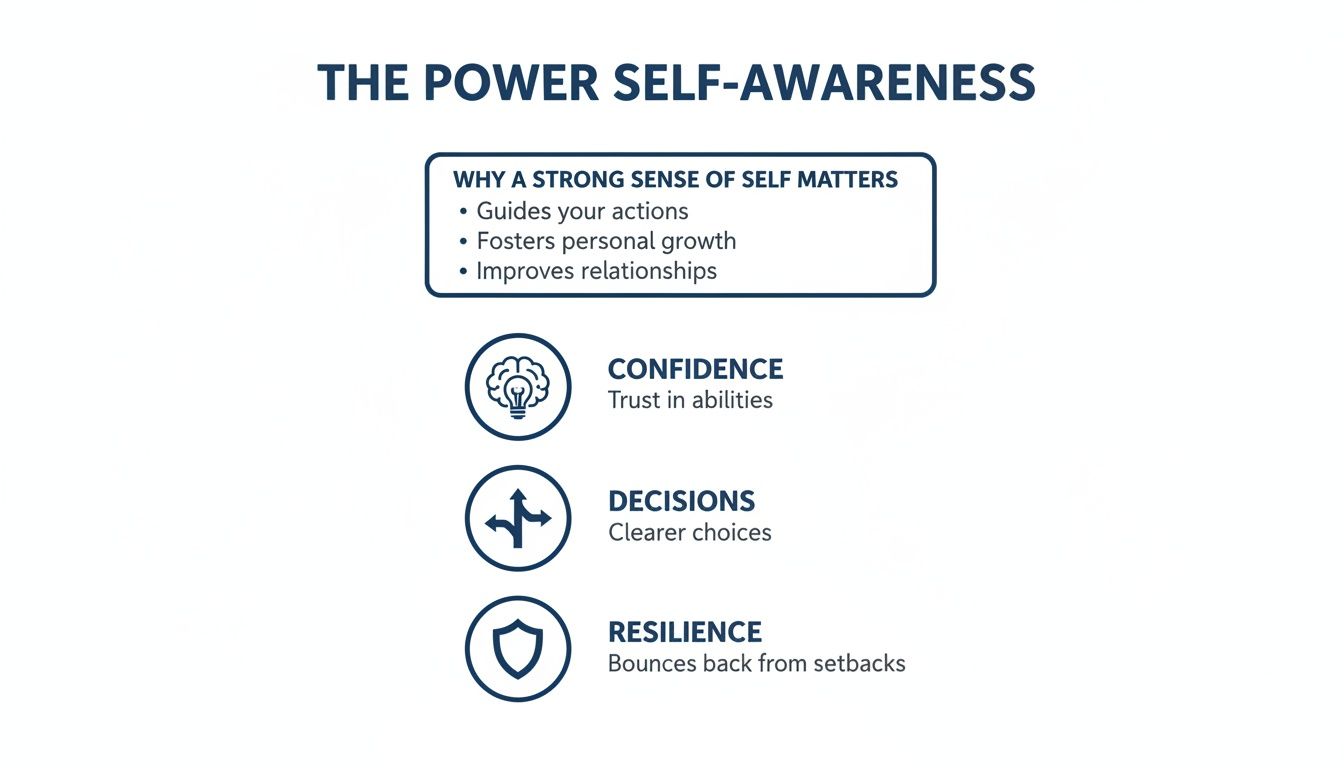
As you can see, a strong sense of self is what fuels real confidence, helps you make sharper decisions, and builds the resilience you need to handle whatever curveballs life throws your way.
Healthy vs. Fragile Sense of Self: A Practical Comparison
To make this crystal clear, let’s break down what these two mindsets look like in action. The goal here isn’t to make you feel bad about yourself, but to give you the clarity to see where you might be getting in your own way. Sometimes, just recognising the pattern is the catalyst you need for a major shift.
Have a look at the table below as a quick self-check. Read through the different characteristics and see which column sounds more like you. This isn’t about keeping score; it’s simply about gaining awareness.
| Characteristic | Signs of a Healthy Sense of Self | Signs of a Fragile Sense of Self |
|---|---|---|
| Decision Making | You make choices based on your gut and internal values, even if it’s not the popular opinion. You trust yourself to know what’s right for you. | You crowdsource opinions for every decision, terrified of making the “wrong” choice. Your default is to seek approval from others first. |
| Handling Criticism | You can take on constructive feedback without it crushing your spirit. You’re able to separate a comment about your work from a comment about your worth. | Even the slightest criticism feels like a full-blown personal attack, making you defensive, anxious, or causing you to shut down completely. |
| Personal Boundaries | You’re comfortable saying “no” to things that don’t align with your priorities. You can set clear, healthy limits in your relationships without feeling guilty. | You’re a chronic people-pleaser, saying “yes” to everything to avoid disappointing others, often at the expense of your own energy and well-being. |
| Source of Worth | Your self-worth is stable and comes from within. You know your value isn’t tied to your job, your income, or whether you’re in a relationship. | Your self-worth is a rollercoaster, soaring with praise and crashing with failure. It’s entirely dependent on external achievements and validation. |
| Authenticity | You’re pretty much the same person no matter who you’re with. Your actions are a genuine reflection of your beliefs. What you see is what you get. | You’re a social chameleon, changing your opinions, personality, or even your interests to fit in with whatever group you’re with at the moment. |
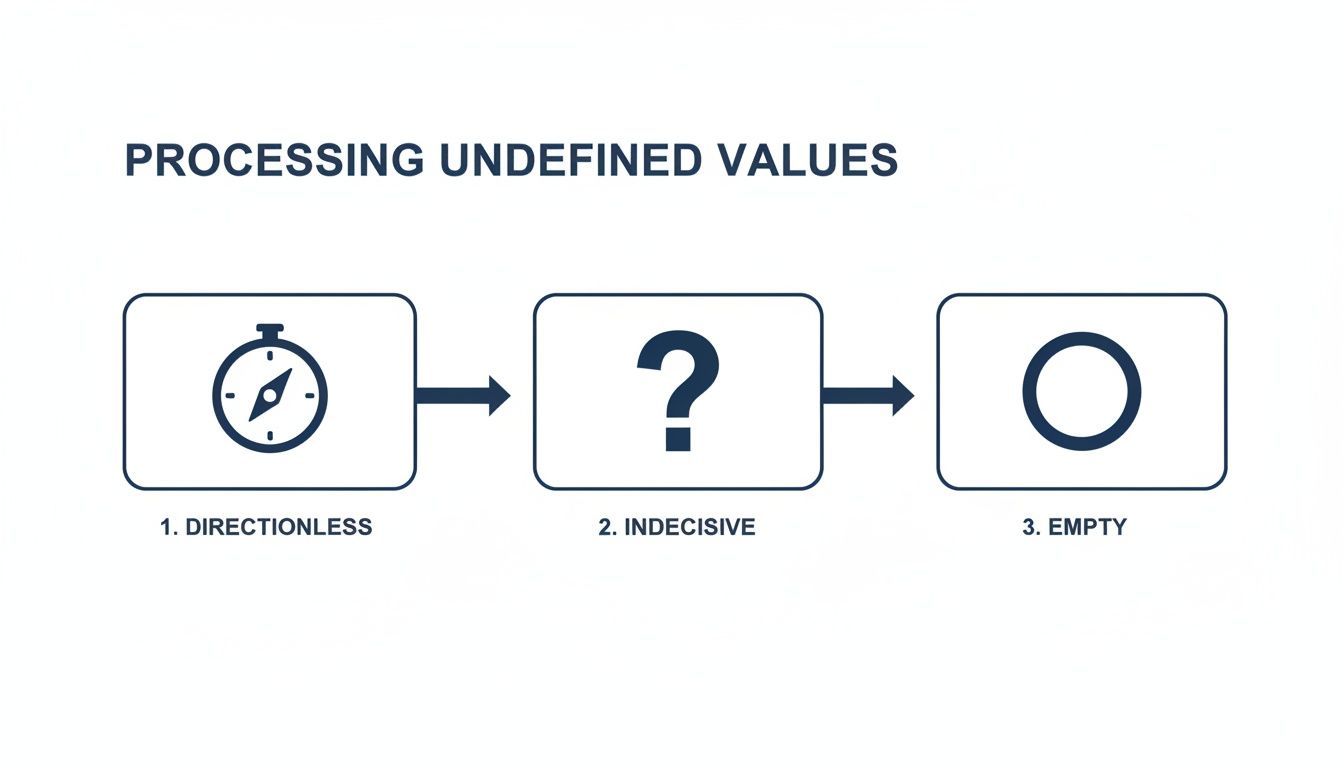
| Sense of Direction | You have a clear idea of your personal “why.” You set goals that are actually meaningful to you, not just goals that look impressive to others. | You often feel a bit empty, lost, or directionless. You find yourself chasing goals that society, your parents, or your peers told you were important. |
Seeing these behaviours side-by-side gives you a snapshot of just how deeply your sense of self shapes your everyday experience.
If you found yourself nodding along more with the right-hand column, don’t panic. That’s not a sign of failure, it’s an opportunity. It’s a signal that it’s time to start the incredibly rewarding work of building your internal anchor.
Practical Steps You Can Take To Build Your Sense Of Self
Understanding the theory is one thing, but actually building a stronger sense of self takes real work. This isn’t some passive process you can just think your way into; it’s about rolling up your sleeves and getting your hands dirty. The framework below gives you tangible, coaching-inspired steps you can start taking today to build that solid internal anchor.
Each of these steps is designed to be straightforward but powerful, giving you a personal toolkit for real growth. Whether you’re a young professional trying to define success on your own terms or a new dad figuring out how to be a father without losing yourself, these exercises will create genuine momentum.
Start By Clarifying Your Core Values
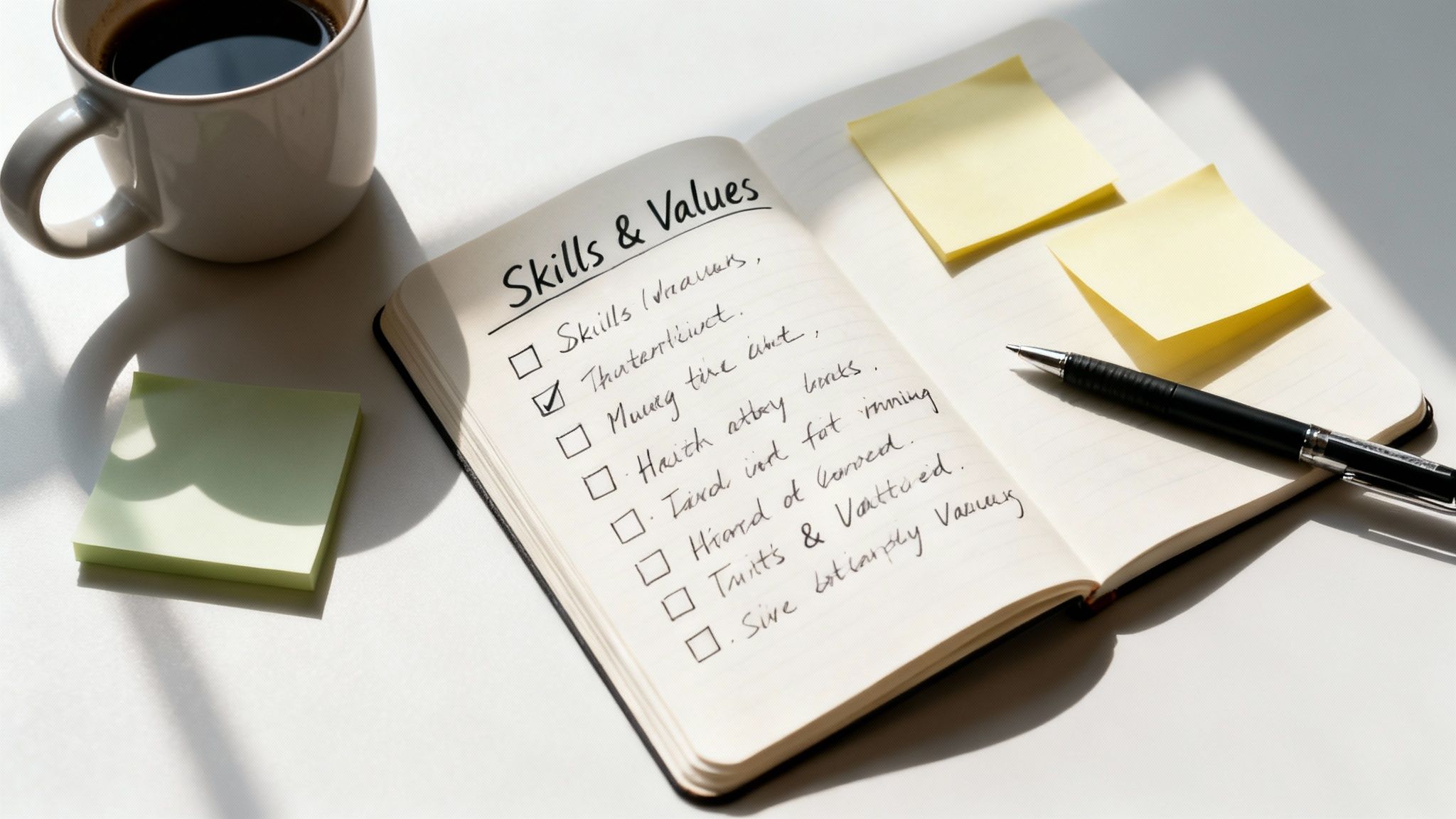
Before you can build a life that feels authentic, you need to know what you’re building it on. Your core values are your non-negotiables; the fundamental principles that guide your decisions when no one is watching. They’re the absolute bedrock of a healthy sense of self.
But here’s the thing: most of us have never actually taken the time to define them. We just absorb values from family, mates, and society without ever stopping to ask if they’re truly our own. This exercise is your chance to change that.
To get started, have a crack at these prompts. Don’t overthink it, just write down whatever comes to mind:
- Think about a time you felt genuinely proud and fulfilled. What were you doing, and what values were you honouring? (e.g., creativity, integrity, leadership).
- Now, consider a time you felt angry, frustrated, or resentful. What important value of yours was being ignored or stepped on? (e.g., fairness, freedom, respect).
- If you could change one thing about your community or the world, what would it be? This often points directly to a core value like justice, compassion, or innovation.
Look over your answers and circle the recurring themes and words. Try to boil it all down to a list of your top 5-7 core values. These are now your personal filters for making decisions.
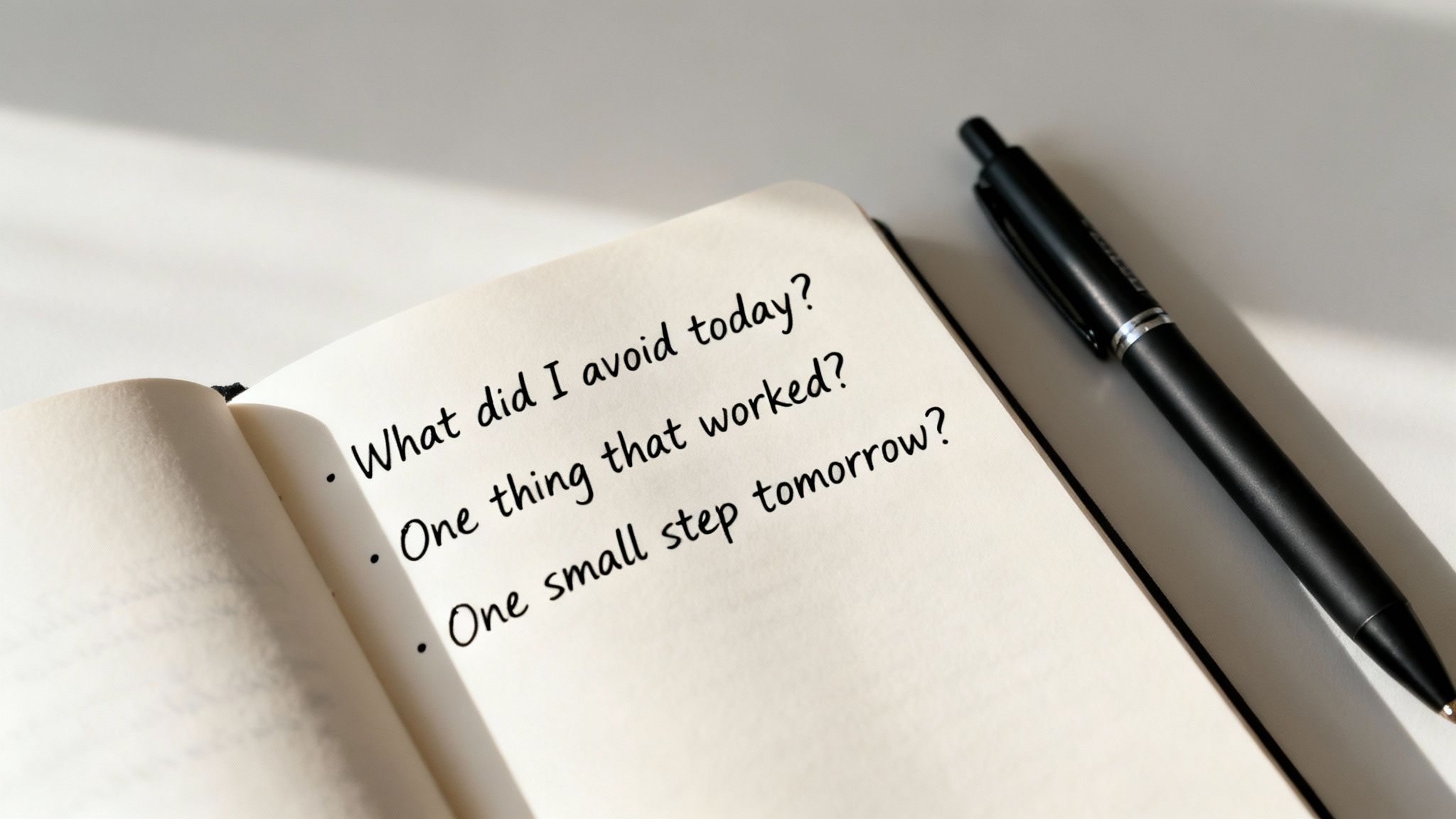
Uncover Your Beliefs Through Journaling
Your beliefs are the stories you tell yourself about who you are and how the world works. A lot of these beliefs run on autopilot, shaping your reactions and choices without you even realising it. Journaling is a seriously powerful tool for bringing them to the surface so you can decide if they still serve you.
This isn’t about writing a perfect essay. It’s about having an honest conversation with yourself on paper.
The goal of journaling isn’t to find the right answers, but to ask yourself better questions. It’s the practice of observing your own mind without judgment, which is the cornerstone of self-awareness.
Use these prompts to get the ball rolling, dedicating a few minutes each day to one of them:
- “I should…” Statements: Finish the sentence “I should…” as many times as you can. Where did these “shoulds” even come from? Are they really yours?
- Defining Success: Forget about money or job titles for a second. What does a truly successful life look and feel like to you?
- Core Strengths: What’s something you’re naturally good at? How does it feel when you’re using that strength?
- Handling Failure: When was the last time you stuffed up or failed at something? What story did you tell yourself about it? Is that story helping you?
This practice helps you separate your own authentic voice from the internalised expectations of others, which is critical for strengthening your sense of self.
Set Goals That Are Genuinely Yours
Once you have a clearer picture of your values and beliefs, the next step is to align your actions with them. So many people set goals based on what they think they should want; the impressive career, the big house, the perfect family. This external focus is a classic sign of a fragile sense of self.
True fulfilment comes from chasing goals that actually resonate with your inner compass. A goal that’s aligned with your values provides its own motivation. For example, if “freedom” is a core value, a goal for you might be starting a side hustle rather than climbing the corporate ladder. If “connection” is key, a goal could be organising a weekly catch-up with your mates.
Building a stronger sense of self often involves learning how to find your passion by connecting your daily actions to what truly matters to you. This is where personal accountability becomes an absolute game-changer.
It’s no surprise the life coaching market is expanding as more people seek help to build intentional lives. Globally, 99% of coaching clients report being satisfied, and a massive 80% gain self-confidence, a crucial part of making this pivot. You can find out more by exploring the Australian market data on the rise of digital coaching. A structured approach turns those vague ambitions into a clear, actionable plan for your life.
How to Navigate Setbacks And Stay The Course
Building a solid sense of self isn’t some straight line from point A to B. It’s a messy, ongoing journey, and it’s full of real challenges. Trust me.
You’ll have days where that crippling self-doubt creeps back in. You’ll cop criticism from people who just don’t get what you’re doing. And you’ll feel that magnetic pull of old, comfortable habits trying to drag you back to where you started.
This is all a normal part of the process. The goal isn’t to be perfect; it’s to build resilience for the long haul. It’s about learning to see these moments as valuable data, not as proof that you’ve failed.
Think of this section as the straight-up, big brother advice you need right now. Growth is tough, no doubt about it, but it’s absolutely worth the effort. Let’s get into the mental tools you need to stay accountable to yourself and keep pushing forward.
Taming Your Inner Critic
One of the biggest hurdles you’ll face is your own negative self-talk. You know the one, that voice in your head telling you that you’re not good enough, that you’re going to fail. It’s an absolute expert at derailing your progress.
The trick isn’t to silence it completely, but to change your relationship with it.
When you catch yourself spiralling into negative thoughts, just pause and challenge them. Ask yourself, “Is this thought actually true, or is it just some old story I’m telling myself?” More often than not, you’ll realise this inner critic is just your fear talking.
A powerful technique is to give this voice a personality. Give it a ridiculous name, like ‘Nigel the Naysayer’. When Nigel starts chirping up, you can mentally say, “Alright, Nigel, I hear you, but I’m in charge here.” This simple act creates distance and helps you see the thought for what it is; just a thought, not a fact.
Setting And Defending Your Boundaries
As you start to strengthen your sense of self, you’ll begin making choices that actually line up with your values. This might mean saying “no” to things you used to agree to, or spending your time completely differently. Not everyone in your life is going to understand or support these changes straight away.
That’s why setting firm personal boundaries is non-negotiable. It’s all about protecting your energy and staying true to your own path, even when it feels bloody uncomfortable.
Here are a few practical ways you can do this:
- Communicate Clearly and Simply: You don’t owe anyone a long-winded explanation. A simple, “Thanks for the invite, but I can’t make it,” is more than enough.
- Anticipate Pushback: Some people are used to you being a people-pleaser. When they push back, just hold your ground calmly and repeat your boundary.
- Protect Your Time: If you’ve committed to a new habit, like journaling or hitting the gym, treat that time like a non-negotiable appointment with yourself. Because that’s exactly what it is.
Setting boundaries is a massive act of self-respect. It sends a powerful message to both yourself and others that your needs matter.
Building Your Support Network
You can’t do this work in isolation. Trying to build a stronger sense of self while surrounded by people who drag you down is like trying to swim upstream in a storm. You need a crew that gets it and genuinely supports your growth.
This doesn’t mean you have to cut everyone out of your life. It just means being intentional about who you give your time and energy to.
Your environment is a powerful force. Curate a support network that reflects who you are becoming, not just who you have been. True support is about encouragement and accountability, not just agreement.
Look for mates who challenge you in a healthy way, mentors who have walked a similar path, or even a professional guide. Having someone to check in with can make all the difference, especially when you hit a rough patch. If you’re looking for that kind of structured support and accountability, exploring a coaching program can give you the framework to stay on track.
Ultimately, navigating setbacks is about learning to be your own staunchest ally. It’s about forgiving yourself when you slip up, celebrating the small wins, and remembering why you started this in the first place. This journey reinforces the very core of your sense of self, it proves that your worth isn’t based on flawless performance, but on your commitment to showing up for yourself, day after day.
Got Questions? Let’s Get Them Answered
Digging into your inner world and figuring out who you are can bring up a lot of questions. It’s only natural. Below, I’ve tackled some of the most common ones that come up, giving you direct, no-BS answers to help you on your journey.
How Long Does It Take To Build A Stronger Sense Of Self?
Look, there’s no magic timeline here. This is a deeply personal journey, and everyone moves at their own pace.
That said, with consistent effort and the right guidance, most people start to feel a real shift in their clarity and confidence within a few months. It’s less about hitting some final ‘destination’ and more about building a lifelong habit of checking in with yourself. The goal is progress, not perfection. Coaching can definitely speed things up by giving you a clear structure and a solid dose of accountability, helping you cut through all the frustrating trial-and-error.
Is ‘Sense Of Self’ Just Another Way Of Saying Self-Esteem Or Confidence?
Good question. They’re definitely related, but they’re not the same thing at all.
Think of your sense of self as the concrete foundation of a house. It’s that deep, solid, internal knowledge of who you are, what you stand for, and what your purpose is. It’s the unshakable bedrock that doesn’t crack under pressure.
Once that foundation is solid, you can build the rest of the house:
- Self-esteem is how you feel about the house you’ve built on that foundation. It’s your sense of self-worth.
- Confidence is your belief in your ability to live in that house and handle whatever life throws at it. It’s the trust you have in yourself to take action.
When your sense of self is strong, you create genuine self-esteem and confidence that lasts, the kind that doesn’t crumble the second you stop getting likes on Instagram or praise from your boss.
Can My Sense Of Self Change Over Time?
Absolutely. In fact, it should. A healthy sense of self isn’t some rigid thing you figure out once and lock away. It’s meant to evolve as you have new experiences, learn new things, and just plain grow as a person.
The key difference is that this evolution is driven by your internal compass and reflections, not by a desperate need to fit in or keep everyone else happy.
Your core identity should be both stable and adaptable. Think of it like a firm anchor that still allows your ship to navigate the changing tides of life without getting lost at sea.
Big life events like a career change, becoming a parent, or getting through a massive personal challenge will naturally sharpen your understanding of who you are. The goal is to build a core you can always come back to, even as you continue to grow.
Feeling like it’s time to stop winging it and start building a life with real intention? At Your Bro, we provide the practical, no-BS guidance to help you find your purpose and create an actionable plan. Book a free discovery call today and let’s get to work. https://yourbro.com.au