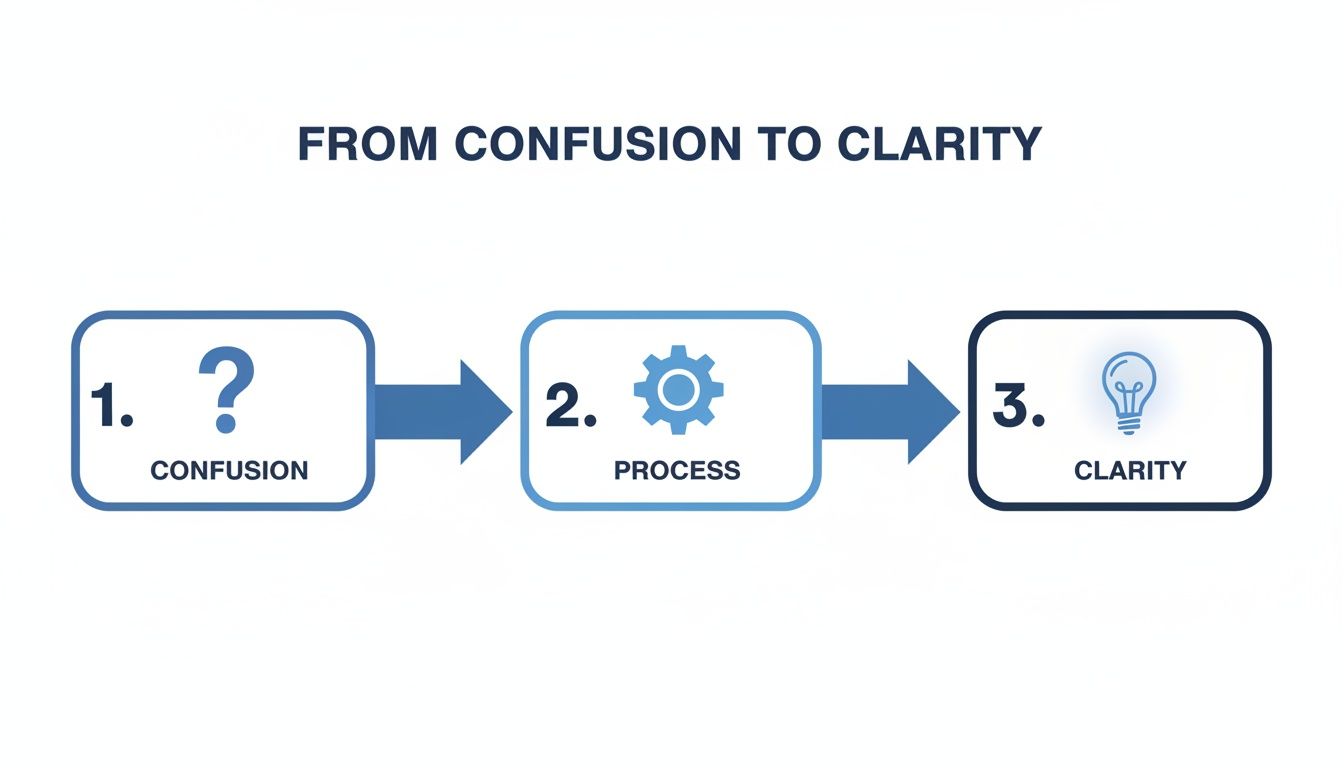
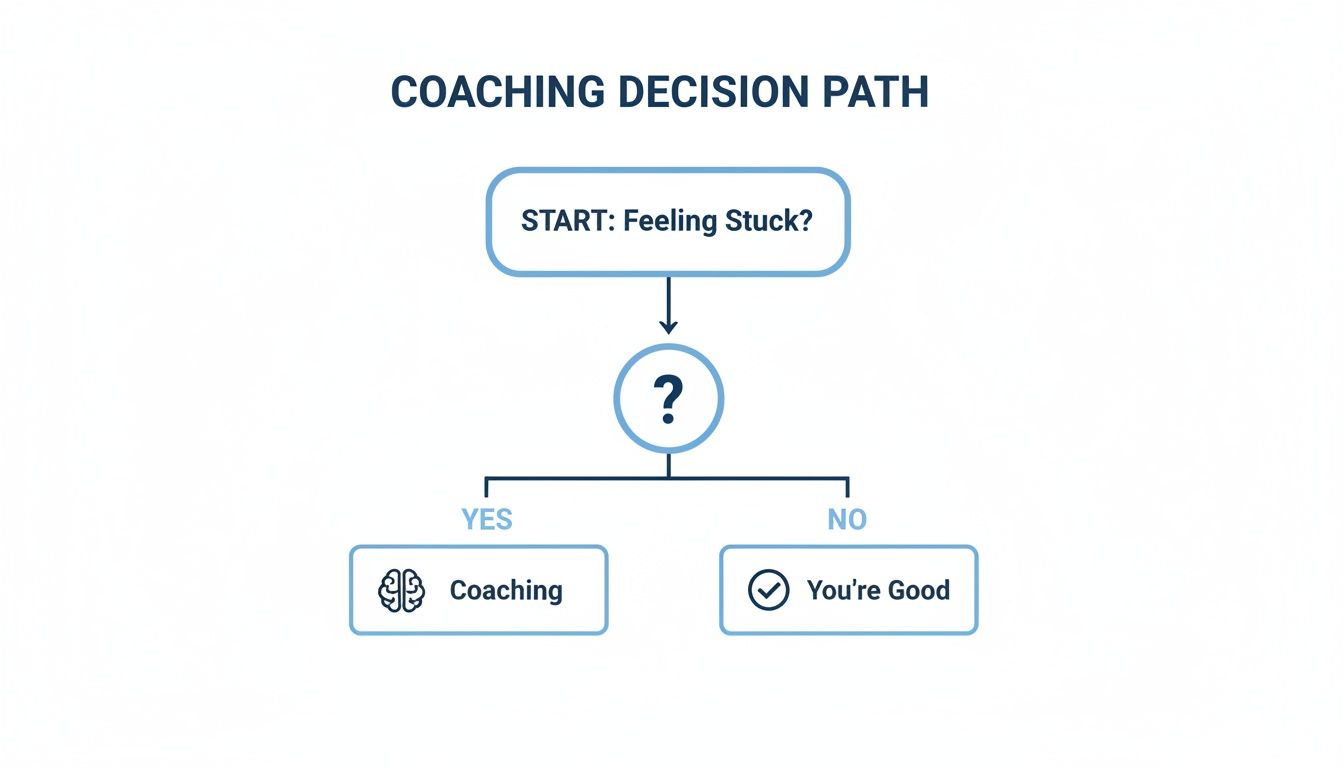
Ever felt like you’re just drifting, unsure of which way to turn next? It’s a common feeling, and it’s usually what nudges people to start asking the big questions, like, "what are your values?"
If you’re reading this, chances are you feel a bit lost or unsure about what you should be aiming for. That’s completely normal. Most people live their whole lives without ever sitting down to figure this stuff out. They just go with the flow, picking up goals and expectations from parents, mates, and social media.
The problem is, when you live without a clear sense of your own values, you end up feeling pulled in a dozen different directions. You’re not in the driver's seat; you’re just a passenger. This guide is about putting you back in control, not with some rah-rah motivational hype, but with a practical, grounded way to figure out what actually matters to you.
What Are Your Values? (Plain English Explanation)
Let's cut through the jargon. Personal values are your guiding principles. They’re the fundamental beliefs that help you decide what is important and what isn’t. Think of them as your internal compass for making decisions and navigating life.
This isn't about being perfect. It’s about having a personal code to live by, something that helps you make sense of the world and your place in it. Your values are what you fall back on when you have to make a tough choice and nobody else is looking.
Difference between values and goals
It’s easy to mix these two up, but they’re completely different. Getting this right is the first step toward real clarity.
A goal is a destination you can reach. It’s something you can tick off a list, like running a marathon or getting a promotion. A value is the direction you travel in for your entire life. You can’t "complete" a value like Honesty or Growth; you just choose to live by it every day.
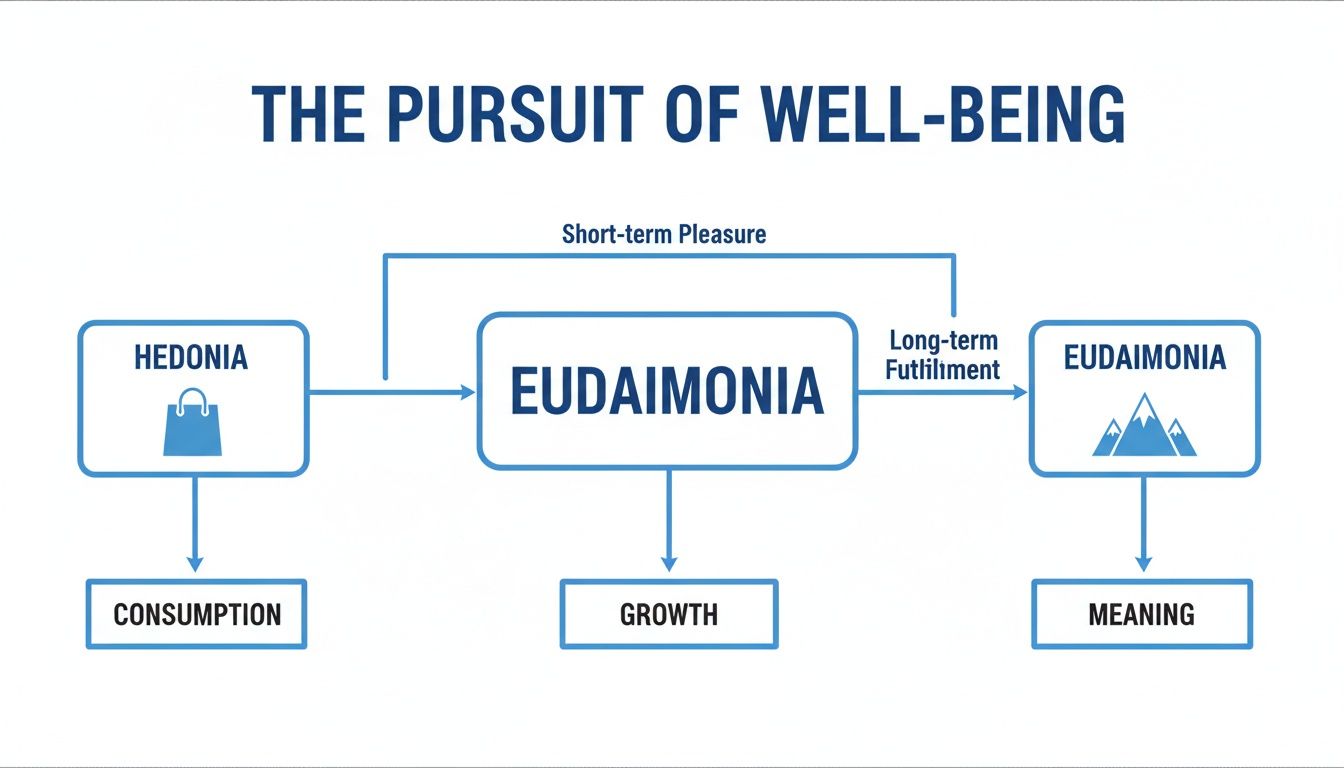
Goals are the what. Values are the how and the why. You can achieve a goal and still feel empty if it wasn't aligned with your values in the first place.
Difference between values and personality
Your personality is your natural set of tendencies. Are you introverted or extroverted? Spontaneous or a planner? It’s your default wiring, the stuff you don’t really choose.
Your values, on the other hand, are a conscious choice. You might be a quiet, introverted person who deeply values community and connection. Or you could be a loud, outgoing person who values stability and quiet reflection.
Your personality is what you are. Your values are what you choose to stand for.
Why Your Values Matter More Than Motivation

We've all been there. You get a sudden jolt of inspiration to sort your life out. You hit the gym, start that project, eat clean. You’re on fire for a few days.
Then, life happens. A long day at work, a flat tyre, or you just wake up feeling flat. The fire is gone. Suddenly, the couch and a mindless scroll on your phone look a lot more appealing.
Relying on motivation alone is a terrible long-term strategy. It’s a feeling, and feelings are fickle. This is where your personal values come in.
Values are what get you out of bed on a cold morning when motivation has packed its bags and left. They're the solid, unchanging reason why you’re doing something in the first place. If you value ‘Health’, you go to the gym not because you feel like it, but because it aligns with the man you want to be. The action becomes an expression of your character, not just a reaction to your mood.
When you’re clear on your values, you have a reason to stay disciplined even when it’s hard.
How unclear values lead to procrastination and distraction
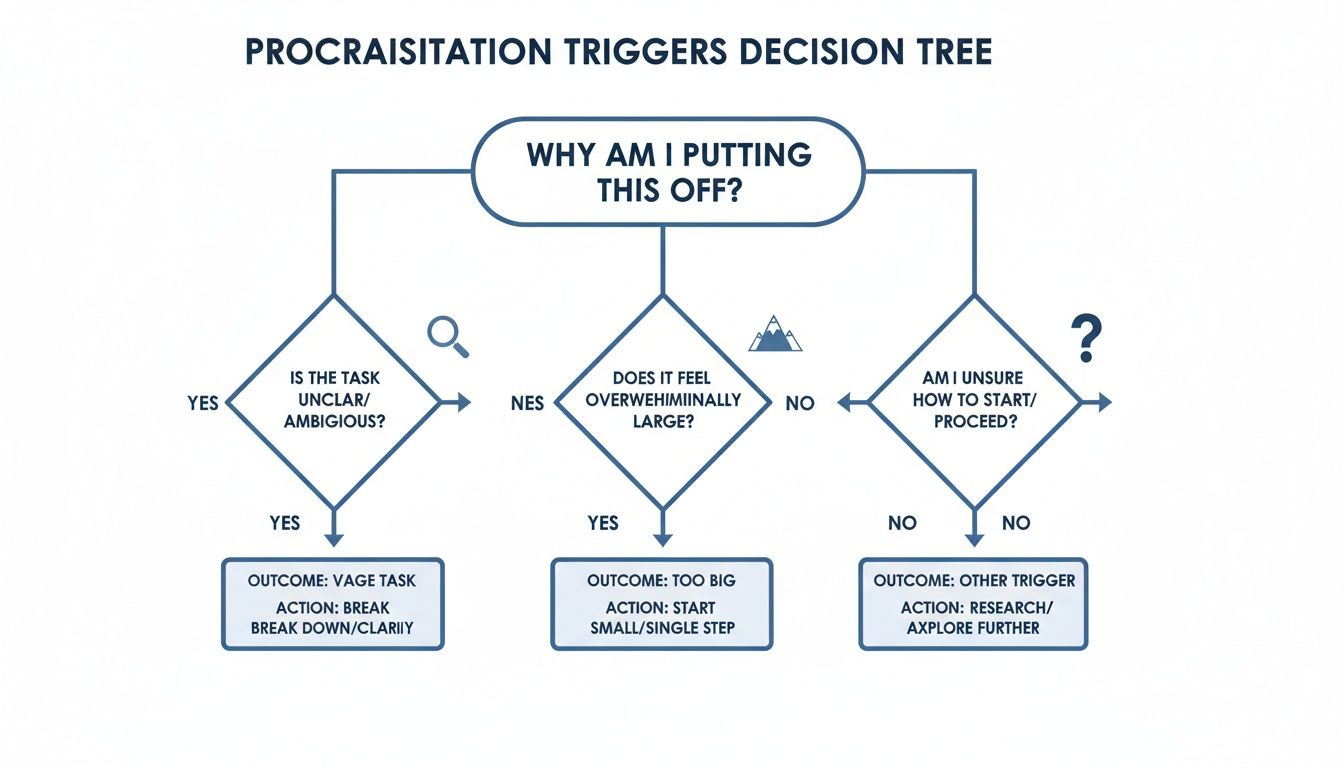
Without a clear set of values, your brain will always default to the easiest path. It's just how we're wired. This is why you end up scrolling on social media for an hour instead of doing that one thing you know is important. The cheap, easy dopamine hit is always more attractive than the difficult, meaningful work.
But when you’re crystal clear on what your values are, you create a filter for your decisions. You start asking better questions, like: “Does this decision move me closer to the man I want to be?” This simple shift helps you become proactive and intentional, rather than just reacting to whatever your brain feels like doing in the moment.
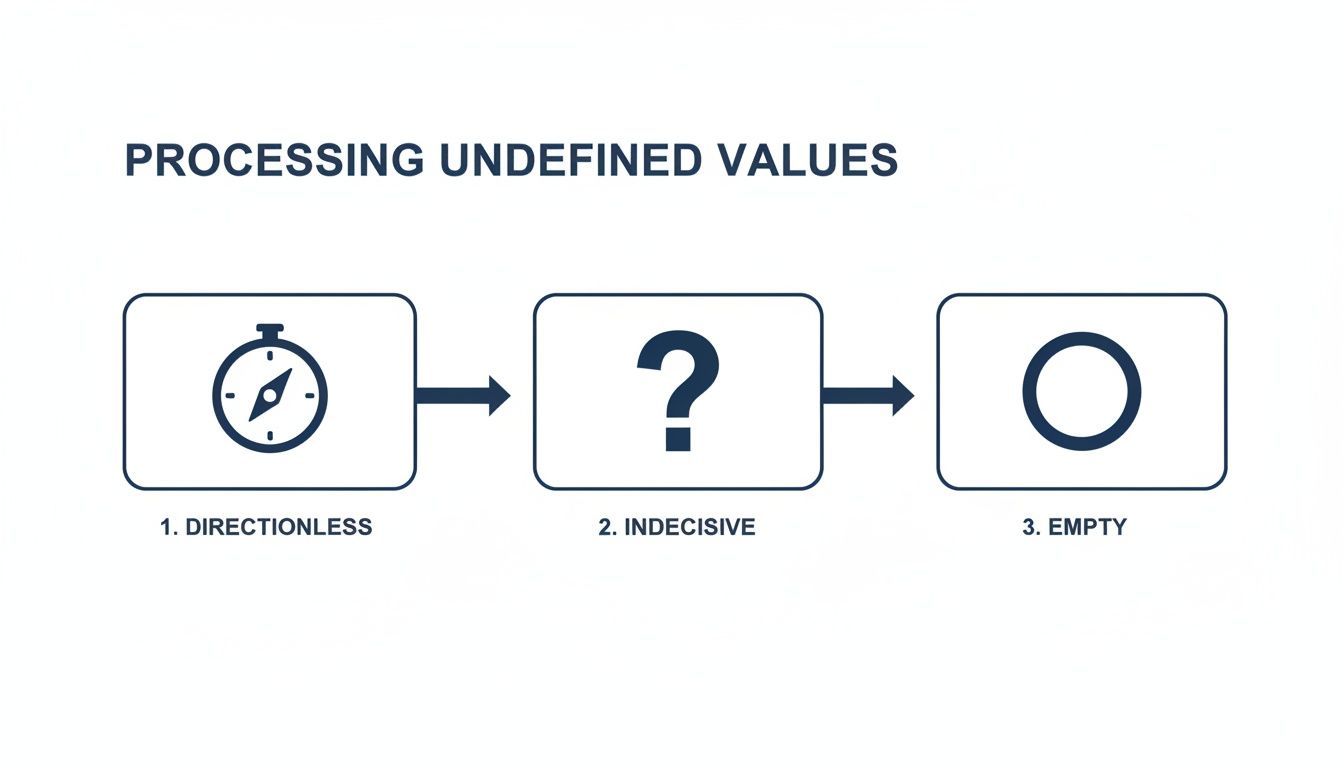
Signs You Haven’t Defined Your Values
That feeling of being stuck or adrift often comes from a disconnect between what you do every day and what you actually believe in. When you haven't defined your core values, life just happens to you. You’re not steering the ship; you’re just getting tossed around.
Here are a few common signs:
-
Feeling lost or directionless. You might have a job or be studying, but it feels like you're on a treadmill to nowhere. You don't have a good reason to get out of bed beyond just needing to.
-
Saying yes to things you regret. You agree to things that drain your energy because it's easier than setting boundaries. Your time gets spent on other people's priorities, not your own.
-
Constant comparison to others. You scroll social media and feel inadequate looking at other blokes who seem to have it all figured out. Without your own definition of success, you end up chasing someone else’s.
-
Chasing goals that feel empty. You get the pay rise or finish the big project, but the feeling of accomplishment is hollow and gone in a flash. Your goals aren't connected to a deeper "why".
-
Struggling to stay disciplined. You find it hard to stick to good habits because there's no strong, internal reason driving you forward when things get tough.
Recognising these signs isn't about beating yourself up. It’s about spotting the problem so you can start building a more solid foundation for your life.
Common Misunderstandings About Values
Before we go further, let's clear up some common bullshit around values. This isn’t a self-help exercise to make you feel good. It’s a practical tool.
Your real values are not:
-
What sounds good on paper. Words like "Innovation" or "Excellence" sound great in a corporate meeting room but often mean nothing in real life. Your values should be grounded and personal.
-
What your parents expect. A lot of us inherit a set of values from our family. Part of growing up is figuring out which of those you actually believe in, and which ones you're carrying just to please others.
-
What social media rewards. The online world rewards hot takes, outrage, and showing off. Chasing likes and validation is a guaranteed way to build a life that looks good but feels empty.
-
What makes you look successful. True values guide your behaviour when nobody is watching. They aren't about crafting an image or impressing people.
Getting honest about this is crucial. Defining your values is about discovering what is true for you, not performing for an audience.
How Values Are Formed
Your values don't just appear out of thin air. They're shaped over time by your experiences, for better or worse. Understanding where they come from can help you figure out which ones are truly yours.
-
Early life influences: What your parents, teachers, and family taught you about right and wrong forms the initial bedrock. These are your default settings.
-
Hard experiences: Getting fired, going through a tough breakup, or facing a major failure. These moments force you to figure out what you’re made of and what really matters when things fall apart.
-
Role models (or lack of them): The people you admire show you what certain values look like in action. Likewise, seeing people you don't want to be like can clarify what you stand against.
-
Reflection and deliberate choice: This is the stage you’re at now. It’s about consciously looking at all those influences and deciding for yourself what you want to stand for moving forward.
This isn’t about blaming your past. It’s about understanding it so you can make intentional choices about your future.
How to Figure Out What Your Values Are (Step by Step)
Alright, let's get into it. This isn't about finding the "right" answers. It’s about finding your answers. The following steps are practical, designed to cut through the noise and get to what truly matters to you. Try not to overthink it, just be honest with yourself.
Step 1: Look at moments of pride and regret
Think back over your life. Pinpoint two or three moments when you felt genuinely proud of yourself. These don't have to be big achievements. Maybe it was sticking to a gym routine, helping a mate when you were exhausted, or telling the truth when a lie would have been easier.
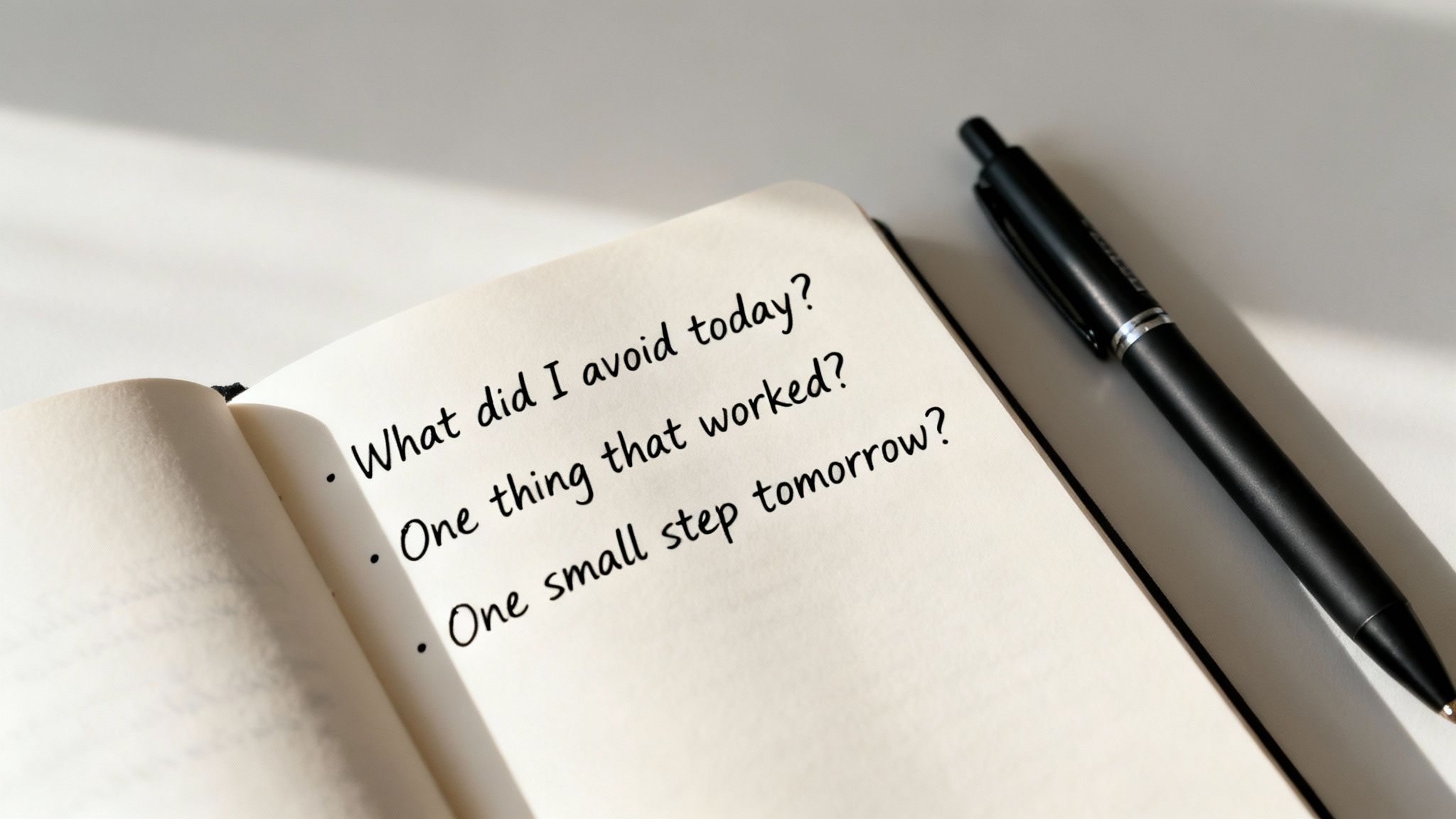
For each memory, ask yourself:
-
What was I doing?
-
Why did that make me feel proud?
-
What principle was I living by in that moment?
Now do the opposite. Think of a couple of times you felt regret or disappointment in yourself.
-
What was I doing?
-
Why did I feel that way?
-
What principle did I violate?
The answers reveal a lot about your underlying values in life.
Step 2: Identify recurring frustrations
The things that consistently piss you off are powerful clues. Think about what really gets under your skin, not just minor annoyances.
Do you get wound up when people are flaky and don't keep their word? That points to you valuing Responsibility. Does it drive you mad when you feel like people aren't being straight with you? You almost certainly value Honesty.
Your anger often points directly to a value that's being violated. When you see something you believe is wrong, it's because it clashes with something you believe is right. Pay attention to that.
Step 3: Examine what you admire in others
Think about people you genuinely look up to. This could be a family member, a mentor, or even a public figure.
List three people you admire. Next to each name, write down the specific qualities that earned your respect. Is it their work ethic? Their loyalty? Their ability to stay calm under pressure?
The qualities you admire in others are often a mirror of the values you want to live by yourself.
Step 4: Narrow down what truly matters
Now, pull it all together. Based on the last three steps, brainstorm a big list of potential values. Don't filter yourself. Just get all the words down on paper.
Once you have your list, the real work begins. Your goal is to narrow it down to your top 3-5 core values. Any more than that and they become impossible to use as a practical guide.
Start by grouping similar words (e.g., 'dependability' and 'reliability' could fall under Responsibility). Then, make some tough calls. If you could only live by five of these principles for the rest of your life, which would they be? Circle them.
Step 5: Test values against real decisions
This is the final check. Look at your short list of values. How do they hold up against a tough decision you've made recently? Or one you're facing right now?
A real set of values should make hard decisions simpler (not necessarily easier). They give you a framework to choose the right path, even when it's the harder one. If your list doesn't help with that, you might need to refine it a bit more.
A List of Common Personal Values (With Explanations)
This isn't a menu to choose from. It’s a list to help you put words to the ideas you’ve been uncovering. See which of these resonate with what you've already discovered about yourself.
-
Integrity: Being honest and having strong moral principles. Doing the right thing, even when no one is watching.
-
Responsibility: Owning your actions and commitments. Being someone others can rely on.
-
Discipline: The ability to do what needs to be done, even when you don't feel like it.
-
Freedom: Having the independence to make your own choices and live life on your own terms.
-
Growth: A commitment to learning, improving, and pushing past your comfort zone.
-
Family: Placing importance on close relationships with family and loved ones.
-
Stability: Valuing security, predictability, and having a solid foundation in life.
-
Contribution: The desire to make a positive impact on others or the world around you.
-
Honesty: Being truthful and straightforward in your communication and actions.
-
Self-respect: Believing in your own worth and acting in a way that honours that belief.
-
Adventure: Seeking out new experiences, challenges, and excitement.
-
Loyalty: Being faithful and committed to the people and principles you care about.
-
Kindness: Treating others, and yourself, with compassion and decency.
Again, these are just examples. Don’t just pick the ones that sound good. Choose the ones that feel true.
How to Choose Your Values Intentionally
Here's the most important part: your values are a choice. While they are shaped by your past, you get to decide what you stand for from this day forward. This isn't about who you've been; it's about who you are choosing to become.
This means taking full responsibility. You can't blame your circumstances or your upbringing for not living by your principles. It's on you.
Your chosen values should guide your behaviour, not just be nice-sounding beliefs you hold. If you say you value "Health" but you're smashing junk food and avoiding the gym every day, you don't actually value health. You value comfort. Being honest with yourself about this gap between your stated values and your actual behaviour is where real change begins.
How to Live According to Your Values
Figuring out what you stand for is a massive step, but it’s only half the job. A list of words doesn’t change anything. The real work begins when you start using those words to steer your choices, every single day.
Aligning daily actions with values
This is about building a bridge from your big principles to your small, daily habits.
If one of your core values is Growth, your daily actions might include reading for 30 minutes or listening to an educational podcast. If you value Health, it means meal prepping on Sunday and scheduling your gym sessions like they're non-negotiable appointments. The key is to make it tangible and measurable. Using a simple tool like a habit tracker template can help you build this consistency.
Making trade-offs
Living an intentional life is all about making trade-offs. You can’t have it all. When your values are clear, these trade-offs stop feeling like sacrifices and start feeling like conscious, powerful choices.
For example, if you deeply value Stability, you might have to walk away from a risky but exciting business idea. If you value Freedom above all else, you might need to live a more minimalist life to avoid getting chained to a massive mortgage. It’s not about finding a perfect balance; it’s about knowing what you’re prioritising and why.
Accepting discomfort
Let’s be honest: the path aligned with your values is often uncomfortable. It means having the awkward conversation, dragging yourself to the gym when you’re tired, or saving money instead of buying the latest gadget.
Embracing this discomfort is a skill. The more you consciously choose the meaningful path over the easy one, the stronger you become. This is how you build genuine self-respect.
Using values as a filter for decisions
When you face a big decision, run it through your values. Should you take that new job? Move to a new city? End that relationship?
Instead of just asking "what do I want to do?", ask "what is the right thing to do based on my values?" This creates clarity and helps you make choices you can stand behind in the long run.
When Values Are Unclear, Life Becomes Reactive
Without a clear answer to "what are your values?", life becomes a constant reaction to outside forces. You react to your moods, to other people's expectations, and to the endless distractions fighting for your attention.
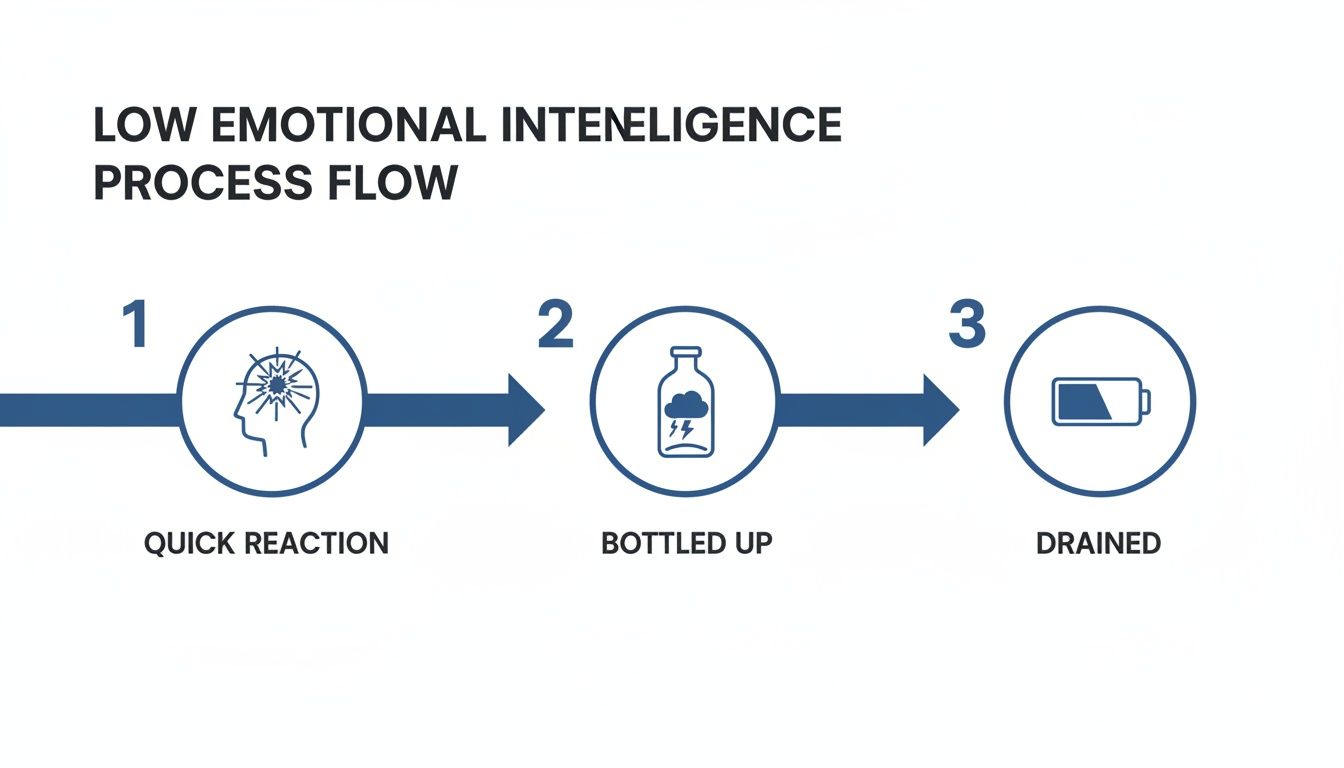
This leads directly to procrastination, because you have no strong "why" to power you through difficult tasks. It leads to distraction, because your phone offers an easier hit of stimulation than meaningful work. And ultimately, it leads to burnout, because you're spending all your energy on things that don't actually fuel you.
Clarity isn't just a nice idea. It's the foundation for a focused, disciplined, and fulfilling life.
How Coaching Can Help Clarify Your Values
Figuring this all out on your own can be tough. It’s hard to see the picture when you’re standing inside the frame. Sometimes you just go around in circles in your own head.
Some people find it helpful to work through this with guidance rather than alone. A coach or mentor doesn't give you the answers. They ask the right questions to help you find your own. It's a dedicated space to unpack your experiences and connect the dots without judgment.
At Your Bro, our one-on-one mentoring is built to do exactly that. We help young men get clear on their values and then turn that clarity into structure and action. If you feel like a bit of guidance could help, booking a Book a Free Discovery Call to Get Started is a no-pressure way to see if it’s a good fit.
Recommended Resources on Values
If you want to go a bit deeper, here are a couple of solid resources that cut through the hype.
-
Book: Man's Search for Meaning by Viktor Frankl. It's a heavy read, but it’s the ultimate book on finding meaning and purpose in the toughest conditions imaginable. It shows how powerful values can be.
-
Video: This video from The School of Life offers a calm, reflective take on finding fulfilling work, which is closely tied to understanding your values.
Conclusion
Figuring out what your values are is not a one-time event. It’s a process. The goal isn’t to come up with a perfect, permanent list. It’s to start the conversation with yourself and get a clearer sense of direction.
Be patient with yourself. This kind of reflection takes time. But the clarity and confidence you’ll gain from knowing what you stand for is worth the effort. You’ve taken the first step just by reading this. Now, it's time to do the work.